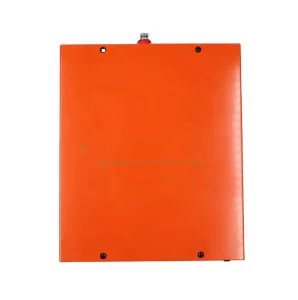
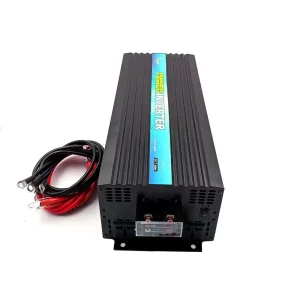
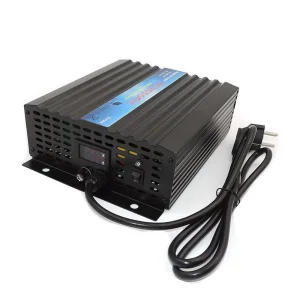
Engineered to conform with North American electrical standards, IEEE 1547 grid compliance, and New York Climate Leadership and Community Protection Act (CLCPA) energy reliability targets.
The state of New York represents one of the most dynamic, highly regulated, and rapidly expanding photovoltaic (PV) and energy storage markets in North America. Driven by the ambitious mandates of the Climate Leadership and Community Protection Act (CLCPA)—which targets 70% renewable electricity by 2030 and 100% zero-emission electricity by 2040—the demand for robust, high-efficiency solar inverters has reached an unprecedented peak.
In urban centers like New York City (NYC), mandatory building decarbonization policies under Local Law 97 are forcing commercial property owners, multi-family residential complexes, and industrial facilities to integrate solar PV systems and battery energy storage systems (BESS). Concurrently, upstate industrial sectors, agricultural microgrids in the Hudson Valley, and coastal installations on Long Island face unique grid constraints, stringent rapid shutdown requirements, and harsh weather conditions ranging from freezing winter storms to coastal salt fog.
For solar engineering, procurement, and construction (EPC) contractors, solar project developers, and electrical distributors across New York, procuring reliable solar inverters is no longer merely a transaction of purchasing hardware. It requires selecting strategic manufacturing partners who provide technological information gain—deliverable through superior power electronics, proven high-frequency surge capacity, intelligent MPPT tracking algorithms, and seamless compliance with Con Edison, PSEG Long Island, and National Grid interconnection guidelines.
The global solar inverter industry is experiencing a seismic paradigm shift. The historical reliance on massive centralized inverters is rapidly yielding to distributed hybrid string inverters and modular off-grid/grid-interactive power conversion systems. Modern solar architectures demand bidirectional energy management, multi-chemistry battery compatibility (Lithium Iron Phosphate / LiFePO4, AGM, GEL), and real-time cloud telematics.
As global supply chains navigate geopolitical repositioning and fluctuating material costs, global procurement entities are focusing on verified original equipment manufacturers (OEMs) who maintain ISO 9001:2015 quality management systems and provide full-spectrum engineering customization (ODM) to satisfy specialized regional electrical codes.
China’s power electronics manufacturing ecosystem—centered in advanced industrial hubs such as Suzhou and Jiangsu—remains the global benchmark for solar inverter production efficiency, component integration, and cost-per-watt optimization.
By leveraging direct proximity to leading semiconductor foundries, copper winding facilities, aluminum enclosure extruders, and automated Surface Mount Technology (SMT) assembly lines, our manufacturing base achieves superior capital efficiency without compromising hardware durability.
Sourcing Tier-1 IGBT modules (Infineon, STMicroelectronics) and custom-wound toroidal transformers directly from local supply networks, drastically cutting bill-of-materials (BOM) lead times.
100% full-load burn-in aging testing, high-voltage insulation checks, thermal imaging diagnostics, and vibration tolerance testing prior to international container loading.
Tailored DC input voltages (12V, 24V, 48V, up to 380V DC), custom AC output sockets (NEMA 5-15R, L6-30R), proprietary LCD menu interfaces, and private-label branding for NY distributors.
For New York solar importers and project developers, this direct factory-to-market model provides a decisive competitive edge: reduced landed costs, rapid production scalabilities, and engineering agility capable of fulfilling specialized project bids on tight schedules.
New York’s diverse geographical and structural landscape requires solar inverter equipment optimized for distinct operational profiles:
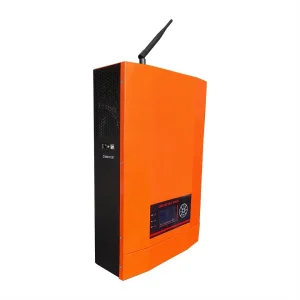
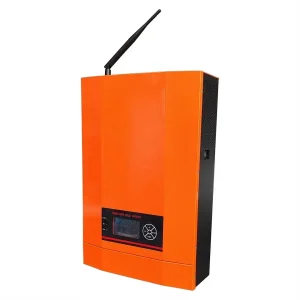
Space-constrained rooftop spaces in Brooklyn, Queens, and Manhattan demand compact, high-frequency hybrid inverters equipped with integrated MPPT controllers. Low acoustic noise (< 45dB), wall-mounted ergonomic chassis, zero-idle power consumption, and seamless RS485/CAN bus communication with indoor lithium battery banks make these units ideal for local building safety compliance.
Farms, cold-storage warehouses, and timber processing facilities across Hudson Valley, Albany, and Buffalo frequently experience utility rural feeder line dropouts. Low-frequency toroidal transformer inverters provide 300% surge capability for 20 seconds, allowing heavy inductive motor loads (water pumps, ventilation fans, industrial compressors) to start without faulting.
Installations along Nassau and Suffolk counties face aggressive coastal salt spray and humidity. Our export-grade solar inverters feature conformal-coated Printed Circuit Boards (PCBs), anodized aluminum heat sinks, and IP30/IP65 protective enclosures designed to prevent atmospheric oxidation and electrical short-circuiting over decades of continuous operation.
From utility service trucks operating in Westchester County to emergency medical support vehicles and mobile command trailers, lightweight high-frequency pure sine wave DC-to-AC power converters ensure continuous 120V/240V clean power for sensitive diagnostic machinery and power tools on-site.
When evaluating international solar inverter suppliers and exporters for the New York commercial and residential markets, procurement managers must evaluate critical technical parameters beyond initial cost-per-watt metrics:
Ensure Total Harmonic Distortion (THD) remains below 3% under full resistive and inductive load profiles. Pure sine wave output is mandatory to protect sensitive medical electronics, server racks, and variable-frequency drives (VFDs) from micro-stuttering and harmonic overheating.
High-frequency switching inverters excel in static electronic loads, whereas heavy-duty low-frequency models utilizing copper toroidal transformers are necessary for high-inrush motor starts (up to 3x nominal continuous rating).
Inverters must support customizable multi-stage charge profiles (Bulk, Absorption, Float, Equalization) with programmable cutoff voltages for both lithium (LiFePO4) and lead-acid/GEL storage architectures.
As the New York power grid increases its reliance on intermittent renewable generation, the role of the solar inverter is rapidly evolving from a passive DC-to-AC conversion device into an intelligent grid asset. Future market dominance in New York will belong to inverter platforms offering:
Explore our complete range of high-frequency, low-frequency, portable, wall-mounted, and RV-ready power inverters engineered for international distribution.
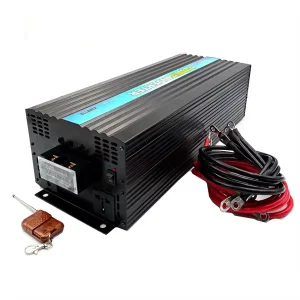
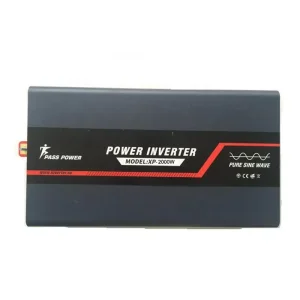
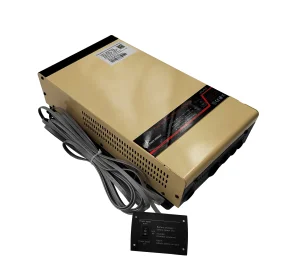
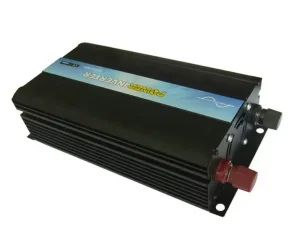
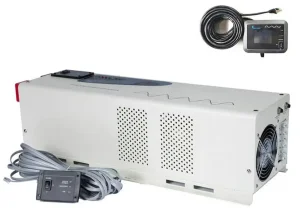
Get competitive factory-direct wholesale pricing, OEM/ODM customization specifications, complete testing reports, and technical documentation today.
Send Inquiry Now