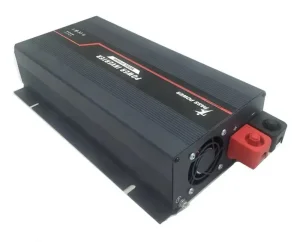
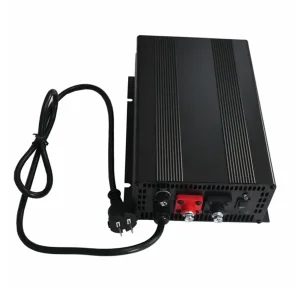
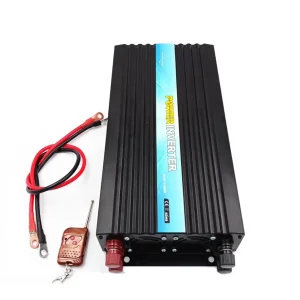
Best 110v/220v ac inverter Factories & Products

An Industrial Procurement Benchmark & Whitepaper on Dual-Voltage Pure Sine Wave Power Electronics, Supply Chain Engineering, and OEM Manufacturing Excellence in China

Featured High-Performance Inverter & Power Products

Engineered for industrial reliability, off-grid power resilience, and precise single/three-phase dual voltage conversion.
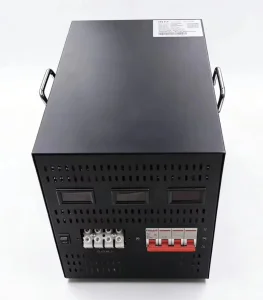
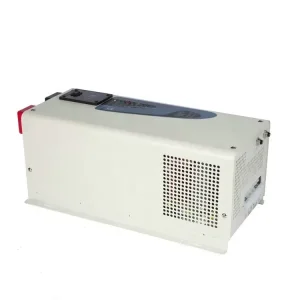
ODM Maili Direct sale of CE CB Rohs certification 3 Phase Single Phase 9000W High Frequency Inverters
ODM Maili Direct Sale CE CB RoHS 3 Phase Single Phase 9000W High Frequency Inverters
View Product Specs
Custom Ultra-thin 800W Micro 12v 110v Pure Sine Wave Inverter Charger
Custom Ultra-thin 800W Micro 12V to 110V Pure Sine Wave Inverter Charger
View Product Specs
2000W Solar Inverter Battery Charger Kit 24V 120V Pure Sine Wave
2000W Solar Inverter Battery Charger Kit 24V to 120V Off-Grid Pure Sine Wave
View Product Specs
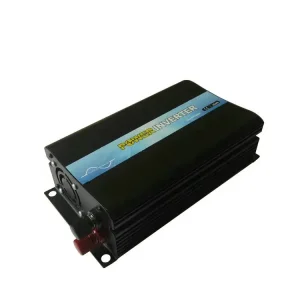
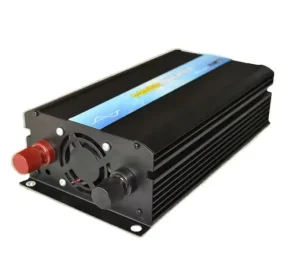
OEM High Quality 600W Power Inverter Pure Sine Wave 24V DC to 120V AC
OEM High Quality 600W Pure Sine Wave Power Inverter 24V DC to 120V AC Soft-Start
View Product Specs
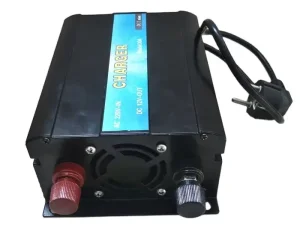
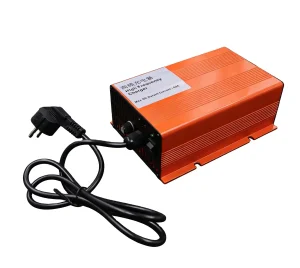
Portable 12V 30A Car Lead-acid Battery Charger
Portable 12V 30A Lead-Acid Battery Charger & Solar Controller Factory Direct
View Product Specs
Wholesale Portable 12V 30A Car Battery Charger Extension Cord
Wholesale Portable 12V 30A Smart Car Battery Charger with Extension Cord
View Product Specs
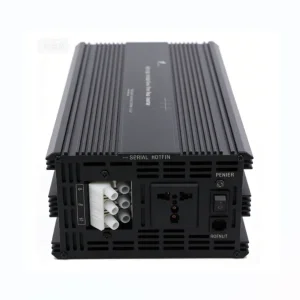
1000W 12V DC to 120V AC High Frequency Pure Sine Wave Inverter
Off-Grid Single Phase 1000W 12V DC to 120V AC High Frequency Pure Sine Inverter
View Product Specs
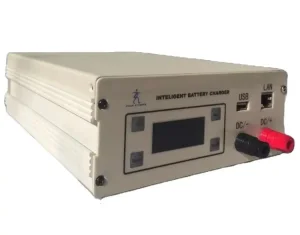
3 Stages 12V 70A Max Output Current Intelligent Charger
Custom 3-Stage 12V 70A Max Output Intelligent Smart Battery Charger LED Display
View Product Specs

Industrial Executive Summary: The Global Dual-Voltage Inverter Landscape

Analyzing global market dynamics, supply chain efficiencies, and critical engineering choices for B2B power conversion sourcing.

98.4%
Peak Conversion Efficiency
< 3%
Total Harmonic Distortion (THD)
300%
Inductive Load Surge Margin
15+ Yrs
OEM Supply Chain Expertise

The global transition toward resilient off-grid power architecture, mobile fleet electrification, and hybrid renewable microgrids has dramatically elevated the operational requirement for dual-voltage (110V/220V AC) pure sine wave inverters. Engineering teams, industrial procurement officers, and tier-1 OEM distributors face complex trade-offs between low-frequency toroidal transformer topologies and high-frequency switch-mode power supplies (SMPS).

Navigating global grid specifications requires absolute precision: North America and parts of Latin America demand 110V/120V AC output at 60Hz (often requiring split-phase L1/L2/N configurations for heavy 240V appliances), whereas Europe, Asia, Oceania, and Africa mandate 220V/230V/240V AC at 50Hz. A leading OEM inverter manufacturer must deliver modular, multi-national voltage platforms capable of seamless grid integration, rapid dynamic response to inductive loads, and strict compliance with international electromagnetic compatibility (EMC) and safety mandates.

Strategic Information Gain: Sourcing dual-voltage 110V/220V AC inverters from certified Chinese industrial hubs provides global buyers with a 35%–50% cost-performance advantage, driven by localized magnetics supply chains, integrated semiconductor packaging, and direct factory OEM customization.

Competitive Strategic Advantages of Chinese Inverter Manufacturing

Why China's East Coast industrial clusters (such as Suzhou and the Yangtze River Delta) represent the world's premier OEM hub for power electronics.

Integrated Supply Ecosystem

Chinese manufacturing hubs consolidate all tier-2 raw materials within a 50-kilometer radius: high-permeability toroidal iron cores, pure oxygen-free copper windings, automotive-grade MOSFETs/IGBTs, and specialized aluminum extrusion heat sinks. This geographic density slashes bill-of-materials (BOM) costs by up to 28%.

Strict QA & Automated Testing

Leading factories like Suzhou Maili Electrical Appliance Co., Ltd. operate under ISO 9001:2015 quality management protocols. Every unit undergoes automated optical inspection (AOI), high-potential (Hi-Pot) insulation checks, and 100% full-load burn-in testing under thermal stress (+50°C) prior to export dispatch.

Agile OEM/ODM Customization

From non-standard input voltages (such as 36V, 72V, 96V, or 380V DC) to custom communications protocols (CANbus, RS485, Modbus RTU), Chinese engineering teams offer rapid turnarounds: 7 days for preliminary PCB routing, 15 days for working functional prototypes, and 30 days for mass rollouts.

Next-Generation Industry Trends Shaping Power Inverter Development

Key technological shifts redefining inverter architecture, thermal management, and smart grid connectivity through 2026 and beyond.

Wide Bandgap Semiconductors (SiC & GaN)

The industry is rapidly transitioning from traditional Silicon MOSFETs to Silicon Carbide (SiC) and Gallium Nitride (GaN) power devices. Wide-bandgap switching allows higher switching frequencies (above 100 kHz), reducing magnetic component physical volume by 40% while raising energy conversion efficiency above 98.5%.

  • Dramatically reduced heat dissipation requirement
  • Higher switching speed reduces harmonic noise
  • Compact footprint ideal for micro-inverters and vehicle installations

Smart Battery Compatibility & BMS Integration

Modern 110V/220V inverters are no longer passive DC-to-AC converters. Modern units feature active 3-stage intelligent charging protocols and direct communication interfaces with Lithium LiFePO4 Battery Management Systems (BMS), ensuring optimal battery longevity, automated cell balancing, and accurate State of Charge (SoC) reporting.

  • Supports Lead-Acid, AGM, GEL, and LiFePO4 batteries
  • Dynamic voltage and current regulation based on BMS telemetry
  • Low-voltage disconnect (LVD) safeguards battery bank health

Technical Topology Analysis: Low-Frequency vs. High-Frequency Architecture

Selecting the optimal inverter topology based on load profiles, inductive surge spikes, and spatial limitations.

Engineering Feature Low-Frequency Inverter (Toroidal Transformer) High-Frequency Inverter (Switch-Mode SMPS)
Core Circuit Technology Heavy heavy-duty line-frequency copper toroidal transformer High-speed PWM switching with compact ferrite transformers
Surge Capacity Extreme (300% peak up to 20s) - ideal for heavy motor loads Moderate (200% peak up to 2s) - best for resistive loads
Target Application RVs, Air Conditioners, Water Pumps, Electric Tools, EMS Vehicles Laptops, TVs, Sensitive Electronics, Portable Solar Generators
Weight & Form Factor Heavier, robust metal chassis, superior thermal inertia Ultra-compact, lightweight, micro aluminum alloy enclosure
Output Waveform & THD Pure Sine Wave (< 3% THD), isolated transformer output Pure Sine Wave (< 3% THD), high efficiency switching
Idle Current Consumption Slightly higher due to magnetizing current Ultra-low power standby mode (< 0.5A)

Localized Application Scenarios & Macro Industry Solutions

How dual-voltage power inverters address critical operational demands across key international sectors.

RV, Marine & Overland Expedition

110V/120V 60Hz Focus

North American travel trailers and luxury motorhomes require clean 110V/120V AC power to operate roof air conditioners (up to 15,000 BTU), microwaves, and induction cooktops off-grid. Integrated low-frequency inverters featuring built-in shore power transfer switches allow instant seamless transition (< 10ms) without interrupting sensitive onboard electronics.

Off-Grid Residential Solar Microgrids

220V/230V 50Hz Global

In developing power grid markets across South America, Africa, and Southeast Asia, 220V/230V hybrid solar inverters serve as the core energy backbone. Combining MPPT solar charge controllers, battery storage management, and grid bypass functionality, these systems store solar power by day and deliver stable pure sine wave AC at night.

Commercial Mobile Workstations & EMS

Industrial Emergency

Emergency medical service (EMS) vehicles, mobile command centers, and municipal repair trucks depend on heavy-duty 3000W to 9000W low-frequency inverters to run life-support diagnostic gear, high-draw hydraulic tools, and floodlighting under harsh environmental conditions without voltage sag.

Global Enterprise Procurement Guide: Factory Verification Standards

Essential operational criteria global buyers must evaluate before placing high-volume OEM inverter purchase orders.

Compliance Certifications & Grid Mandates

International customs and regional safety authorities enforce non-negotiable standards. B2B buyers must confirm that factory product portfolios carry authentic certification documentation:

  • CE / LVD / EMC: European Union safety standard compliance
  • RoHS: Restriction of Hazardous Substances compliance
  • CB Standard: International IEC 62109-1 / IEC 62109-2 safety accreditation
  • SAA: Electrical safety compliance for Australian and New Zealand markets

OEM Customization Scope & Manufacturing SLA

Ensure your Chinese supplier supports extensive custom engineering capabilities to adapt products directly for your brand line:

  • Housing & Color: Custom powder-coat metal enclosures, branding silk-screen
  • AC Output Sockets: US NEMA 5-15R, Universal, EU Schuko, UK BS1363, AU AS/NZS 3112
  • Software & Display: Custom LCD firmware branding, fault messaging, and parameters
  • Warranty Logistics: Factory spare parts kit (1%–2% PCB/MOSFET supply) and technical support

Additional Factory Direct Inverter & Charger Solutions

Explore specialized high-voltage DC inverters, hybrid MPPT solar units, and intelligent multi-stage battery chargers.
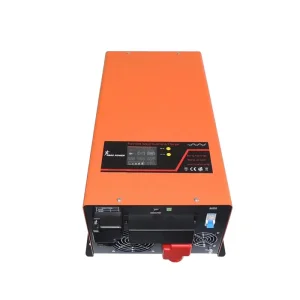
Best PASSPOWER All-in-One Hybrid Solar Inverter 5.5KVA 5500W
PASSPOWER All-in-One Hybrid Solar Inverter 5.5KVA 5500W MPPT 100A 220VAC 48V
View Product Specs
CE Certified 3000w Low Frequency Dc to Ac Inverter Off-grid Home
Maili CE CB SAA Approved 3000W Low Frequency DC to AC Inverter with Toroidal Transformer
View Product Specs
Best Factory OEM 2500W Power Inverter 48V 230V Off-grid Pure Sine Wave
OEM 2500W Power Inverter Pure Sine Wave 48V DC to 230V AC LCD Display
View Product Specs
OEM Maili Portable High-frequency Charger 110V/220V AC to 12V DC 60A
OEM Portable High-Frequency Charger 110V/220V AC to 12V DC 60A Lithium GEL AGM
View Product Specs
High-Quality CE ROHS 3kw dc 380v to ac 220v high voltage pure sine wave inverter
High Voltage 3kW DC 380V to AC 220V Pure Sine Wave Inverter CE RoHS
View Product Specs
OEM 12V 50A Electric Vehicle EV Battery Charger
OEM 12V 50A Electric Vehicle (EV) Premium Intelligent Battery Charger Adapter
View Product Specs
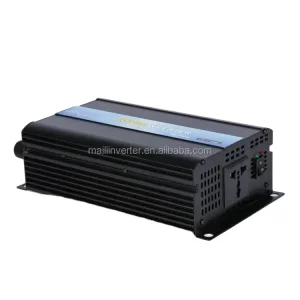
Maili 800W DC to AC Pure Sine Wave Inverter 24VDC to 220VAC
Maili 800W DC to AC Pure Sine Wave Inverter 24V DC to 220V AC & 12V DC Output
View Product Specs
Best Maili 7KW High-power 110V/220V AC Pure Sine Wave Inverter Charger
Maili 7KW High-Power 110V/220V AC Pure Sine Wave Inverter Charger Multi-Protection
View Product Specs

Frequently Asked Questions (FAQ) - Technical & Sourcing Deep Dive

Expert answers addressing operational queries for B2B procurement managers and electrical systems integrators.

Q1 What is the primary technical difference between a 110V/120V AC inverter and a 220V/230V AC inverter?
The fundamental distinction lies in electrical grid standardization, current draw, and output wiring topology. A 110V/120V AC inverter (standard in North America, Japan, and Taiwan) operates at 60Hz and carries higher current (amperes) for a given wattage, requiring thicker copper conductors and heavy-duty busbars inside the unit. A 220V/230V/240V AC inverter (standard in Europe, Asia, Oceania, and Africa) operates at 50Hz and carries lower current for the same wattage, reducing resistive I²R line losses over longer wiring runs.
Q2 Why are low-frequency toroidal transformer inverters preferred for RV air conditioners and motor loads?
Electric motors, air conditioning compressors, and refrigeration units draw an initial locked-rotor amp (LRA) surge that can be 3x to 5x their rated continuous operating power. Low-frequency inverters utilize heavy toroidal iron transformers capable of absorbing and storing magnetic energy, delivering transient surge outputs up to 300% of nominal capacity for 10 to 30 seconds without tripping overload protection. High-frequency switch-mode inverters lack this magnetic inertia and will instantly fault when exposed to severe inductive spikes.
Q3 Can a single factory unit support auto-sensing dual output voltage (110V and 220V AC)?
Yes. Premium OEM manufacturers design split-phase pure sine wave inverters featuring dual secondary transformer windings. This architecture provides L1-N (120V AC), L2-N (120V AC), and L1-L2 (240V AC) simultaneously from a single unit. Alternatively, select high-frequency units feature programmable digital signal processors (DSP) that allow technicians to select between 110V, 120V, 220V, 230V, or 240V AC output frequencies (50Hz/60Hz) via the LCD menu interface.
Q4 What custom OEM options can Suzhou Maili Electrical Appliance Co., Ltd. provide?
Customization options span eight key engineering domains: custom DC input voltage ranges (12V, 24V, 48V, 72V, 96V, up to 380V DC), custom charging profiles (Lithium LiFePO4, AGM, GEL, Lead-Acid), tailored AC output sockets (NEMA, Schuko, UK, Universal, AU), custom LCD interface branding and fault diagnostic codes, RS485/CANbus communication protocol integration, custom aluminum housing colors, and private-label packaging.
Q5 How does Pure Sine Wave output compare to Modified Sine Wave in sensitive electronic applications?
A Pure Sine Wave inverter replicates utility grid power with Total Harmonic Distortion (THD) below 3%. Modified Sine Wave inverters produce blocky square-wave step transitions that cause excessive electrical noise, overheating in transformers, humming in audio equipment, and premature failure of sensitive medical devices, variable-speed motors, microcontrollers, and modern CPAP machines. For professional B2B deployment, Pure Sine Wave is mandatory.
Q6 What compliance certifications are mandatory for importing power inverters into North America and Europe?
For European markets, products must hold CE certification covering both the Low Voltage Directive (LVD EN 62109-1) and Electromagnetic Compatibility (EMC EN 61000), alongside RoHS environmental compliance. For North America, units must comply with UL 1741 (for grid-tied solar inverters) or UL 458 (for vehicle and mobile applications). OEM suppliers like Maili provide certified test reports from recognized testing bodies (SGS, TUV, Intertek).
Q7 What are the thermal derating characteristics of power inverters operating in extreme environments?
Standard power inverters deliver continuous rated power up to an ambient temperature of +40°C (+104°F). Above +40°C, continuous power capacity typically derates by 2.5% per additional °C. Industrial-grade low-frequency inverters utilize heavy extruded aluminum heat sinks, smart temperature-controlled dual ball-bearing cooling fans, and high-temperature (+105°C rated) electrolytic capacitors to maintain continuous output up to +60°C ambient conditions.
Q8 What lead times and Minimum Order Quantities (MOQ) apply for OEM inverter orders?
Standard production lead times for sample evaluation units are 5 to 7 working days. Bulk containerized OEM production (500 to 2,000 units) requires 25 to 35 calendar days from artwork sign-off and deposit receipt. Minimum Order Quantities for standard catalog models start as low as 10 to 50 units, while customized private-label housing runs typically carry an MOQ of 100 to 300 units depending on chassis complexity.