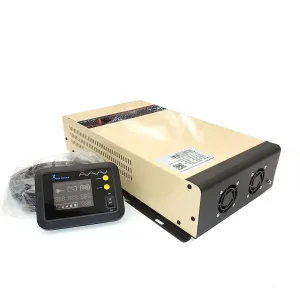
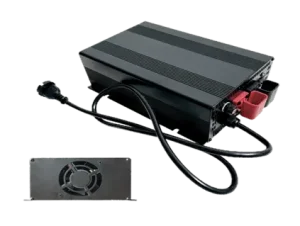
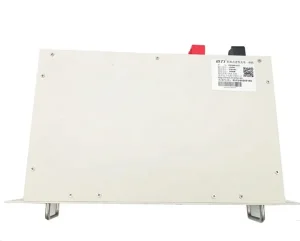
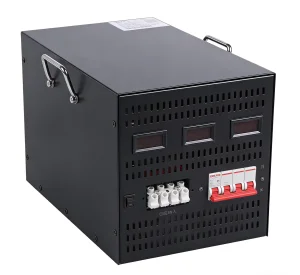
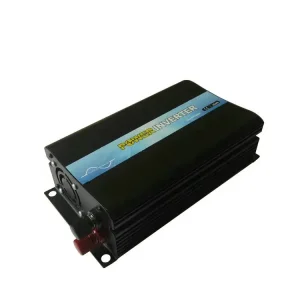
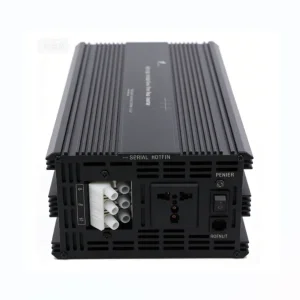
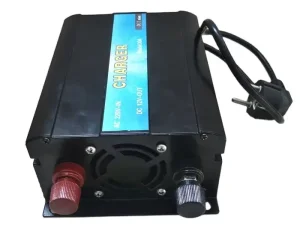
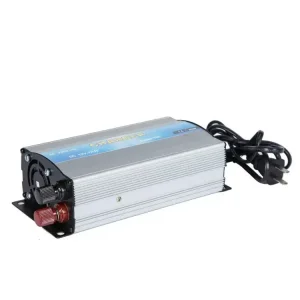
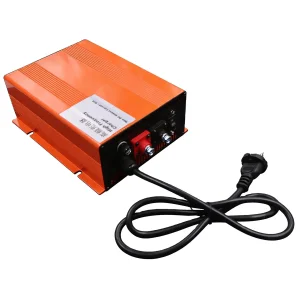
Certified power electronics designed for industrial, mobile, solar, and emergency infrastructure applications worldwide.
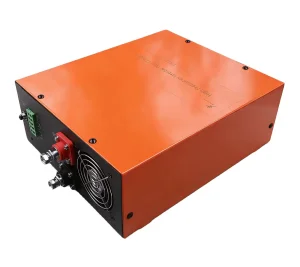
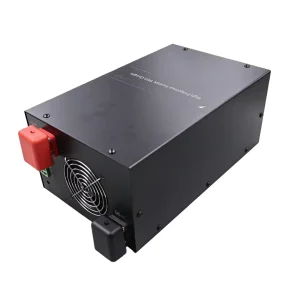
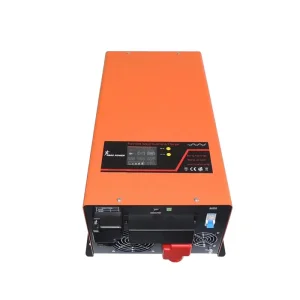
Why 24V Direct Current (DC) platforms have emerged as the operational sweet spot for medium-scale mobile and off-grid power conversion worldwide.
In the evolving power electronics sector, the global demand for reliable 24V pure sine wave inverters has experienced unprecedented growth. As commercial fleets, off-grid telecommunications, marine operations, and remote residential setups demand higher energy density without stepping into hazardous high-voltage DC domains, 24V systems represent the ideal engineering equilibrium between system efficiency, thermal management, and electrical safety.
Key Insight: Transitioning from a 12V DC system to a 24V DC bus reduces current draw ($I$) by exactly 50% for the same watt-load, cutting resistive line losses ($I^2R$) within copper cabling by 75%. This physics-driven efficiency gain allows commercial system integrators to downsize cable gauges, minimize thermal stress, and enhance long-term system reliability.
Global procurement data reveals distinct regional requirements for 24V power conversion architectures:
Driven by severe anti-idle legislation and rapid expansion in Overland/RV electrification, heavy-duty commercial fleets and luxury motorized homes are standardizing on 24V LiFePO4 battery banks paired with high-frequency 24V to 120V/230V pure sine wave inverters.
Accelerating off-grid solar pump deployment, telecommunication tower backup power, and localized microgrids favor low-frequency 24V inverters equipped with heavy-duty toroidal transformers capable of surviving severe grid surges and harsh environmental conditions.
High solar irradiance paired with industrial expansion in mining, agricultural water management, and remote security infrastructure drives massive procurement of 24V hybrid solar MPPT inverters with integrated smart charging protocols.
How advanced automation, localized component ecosystems, and stringent quality control create unbeatable value for global B2B buyers.
Choosing the right 24V inverter supplier and exporter involves evaluating manufacturing depth, engineering compliance, and supply chain resiliency. Chinese manufacturing centers—specifically power electronics hubs like Suzhou, Shenzhen, and Ningbo—have built an unmatched cluster advantage that drastically reduces time-to-market while maintaining world-class quality standards.
In premier Chinese power inverter factories, up to 85% of critical bill-of-materials (BOM) components are sourced within a 50-kilometer radius. From high-grade grain-oriented silicon steel toroidal cores to custom-extruded aluminum heat sinks, advanced Surface Mount Technology (SMT) PCBA assembly, and precision wire harnesses, this ultra-dense supply cluster eliminates global logistics friction and lowers production overhead.
Leading Chinese exporters do not merely assemble parts; they adhere to rigorous ISO 9001:2015 quality management frameworks. Every 24V inverter undergoes multi-stage validation prior to export:
| Testing Phase | Engineering Protocol & Methodology | Quality Assurance Objective |
|---|---|---|
| In-Circuit Testing (ICT) | Automated optical & electrical testing of PCBA components post-SMT reflow soldering. | Eliminates micro-shorts, cold solder joints, and component orientation mismatches. |
| High-Pot & Insulation Test | Application of 1500VAC to 3000VAC isolation voltage between DC input, AC output, and chassis ground. | Ensures electrical safety compliance with CE, UL, and SAA dielectric strength rules. |
| Full-Load Thermal Burn-In | Continuous 100% full-power operation at 45°C–50°C ambient chamber temperature for 4 to 12 hours. | Weeds out early semiconductor infant mortality and verifies cooling fan thermal triggers. |
| Inductive Surge Impact Test | Repeated cycling of 300% peak surge inductive motor loads (pumps, compressors). | Validates MOSFET voltage spike clamping and transformer saturation margins. |
Global procurement teams rarely find off-the-shelf products that meet 100% of their local market specifications. Chinese manufacturing platforms excel at rapid OEM customization, including:
Tailored power topologies solving real-world electrical demands across diverse operational environments.
Modern motorhomes and mobile service vans utilize high-frequency 24V 2000W–3000W pure sine wave inverter chargers. Operating at 24V allows seamless integration with heavy-duty alternator charging, reducing wire thickness and effortlessly starting rooftop air conditioners, induction cooktops, and high-draw power tools.
Remote agricultural sites, drip irrigation pumps, and off-grid residential homes rely on 24V hybrid solar MPPT inverters. Integrated solar controllers optimize photovoltaic panel energy harvesting while automatically switching between solar, battery storage, and standby generator power without interrupting load delivery.
Commercial fishing vessels, yachts, and workboats demand 24V inverters built with conformal-coated PCBAs, anti-corrosive aluminum casings, and isolated ground circuitry. These units power sensitive marine radar, sonar, communication gear, and onboard refrigeration under high humidity and high-vibration conditions.
24V DC is a global standard for telecommunication backup system strings. Dedicated 24V rack-mounted inverter systems convert DC storage directly into clean, ultra-low noise AC power for cellular base stations, fiber optic terminals, and emergency radio transmitters with zero transfer time.
Ambulances, field hospitals, and mobile disaster response units require zero-noise pure sine wave energy to run delicate medical diagnostic devices, oxygen concentrators, and satellite transceivers. 24V high-frequency inverters ensure clean output without electromagnetic interference (EMI).
Automated Guided Vehicles (AGVs) and warehouse robotics platforms utilize 24V internal power rails. Onboard compact 24V to AC inverters power auxiliary sensors, laser scanners, and pneumatic vacuum actuators without adding unnecessary payload weight.
Innovations in semiconductor materials, battery communication, and digital controls driving the next generation of power electronics.
Traditional silicon MOSFET switches are rapidly being superseded by Wide Bandgap (WBG) semiconductors like SiC and GaN in premium 24V high-frequency inverters. WBG switches permit significantly higher switching frequencies (above 100 kHz) with minimal switching losses. This breakthrough enables manufacturers to reduce high-frequency transformer sizes by 40%, lower overall chassis dimensions, and achieve conversion efficiencies exceeding 96%.
As Lithium Iron Phosphate (LiFePO4) replaces legacy Lead-Acid batteries across commercial applications, 24V inverter chargers must evolve beyond basic voltage-sensing logic. Modern inverters communicate directly with the Battery Management System (BMS) via CAN bus or RS485 protocols. This dynamic interaction allows the inverter to adjust charge current in real-time based on cell temperatures, cell voltage balance, and State of Charge (SOC), effectively preventing battery shutdown and extending lithium battery lifespan by up to 300%.
Next-generation 24V inverters feature high-performance Texas Instruments or STMicroelectronics DSP chips capable of calculating pulse-width modulation (PWM) signals in microsecond intervals. Advanced firmware incorporates self-diagnostic algorithms, predictive fan maintenance alerts, wireless OTA firmware updates, and real-time cloud data logging—giving fleet managers complete remote control over energy assets.
Essential engineering parameters every international buyer must verify before placing bulk OEM orders.
Ensure the supplier holds authentic certification test reports from accredited laboratories (SGS, TUV, Intertek). Crucial credentials include CE (LVD EN62109-1/2, EMC EN61000), CB test certificates, SAA for Australian markets, and RoHS environmental compliance.
Inspect the Bill of Materials (BOM). Premium manufacturers utilize 105°C-rated long-life Japanese electrolytic capacitors (Nippon Chemi-Con or Rubycon), genuine Infineon/ST MOSFETs, heavy copper busbars, and dual ball-bearing intelligent cooling fans.
Verify seven layer protection circuitry: Input Reverse Polarity, DC Over-Voltage, DC Under-Voltage Alarm & Shutdown, AC Overload, Output Short Circuit, Over-Temperature, and Galvanic Isolation between DC and AC stages.
Expert technical answers addressing key considerations in 24V DC to AC power inverter procurement and integration.
A 24V DC system strikes an optimal balance for continuous loads between 1,000W and 5,000W. Compared to a 12V system, 24V cuts the operating current in half for the exact same wattage output. Lower current dramatically decreases resistive heat dissipation ($I^2R$ losses), allowing system designers to use thinner, significantly less expensive copper battery cables. While a 48V system reduces current even further, 24V remains preferred in mobile, RV, and marine environments because 24V DC alternators and DC-DC converters are widely standardized, avoiding the high cost and safety complexities of high-voltage DC installations.
Low Frequency (LF) inverters utilize a heavy copper toroidal transformer to step up voltage. They are designed with extreme physical durability, high thermal mass, and extraordinary surge capacities (300% surge for up to 20 seconds). LF models excel at running heavy inductive motor loads such as air conditioners, power tools, refrigerators, and water pumps. High Frequency (HF) inverters use electronic switching and small ferrite transformers. HF inverters are much lighter, more compact, cost-effective, and yield higher idle efficiency, making them superior for electronic equipment, laptop power supplies, and space-constrained installations.
Modern 24V pure sine wave inverters feature custom lithium algorithm profiles. During charging, they deliver precise Constant Current/Constant Voltage (CC/CV) stages without destructive voltage overshoots. During discharge, the low-voltage disconnect (LVD) threshold can be set precisely (e.g., 21.5V to 22.0V) to prevent triggering the internal BMS shutdown of the lithium cells. Advanced models include low-temperature charge cutoff sensing to protect LiFePO4 cells from permanent damage caused by charging below freezing temperatures (0°C).
As a specialized manufacturer and exporter, full custom flexibility is provided: custom DC input voltage windows (e.g., tight tolerance 20V–32V DC), wide range AC output voltage selection (100V to 240VAC), customized grid/generator transfer switch logic, custom wire terminal blocks, customized aluminum housing extrusion profiles, private label artwork, custom branded LCD screen software boot logos, and communication integration (RS485/CAN bus Modbus memory maps).
Pure Sine Wave inverters maintain a clean output waveform with THD < 3%, identical to or cleaner than utility grid power. Modified sine wave inverters produce a blocky waveform with high THD (> 30%), which causes overheating in electric motors, audio buzzing in communication equipment, lines on video monitors, and potential component destruction in sensitive medical or computing instruments. For commercial exports, pure sine wave output is the required industry standard.
Expanded export range covering portable power, high-power water pump drivers, and intelligent battery chargers.