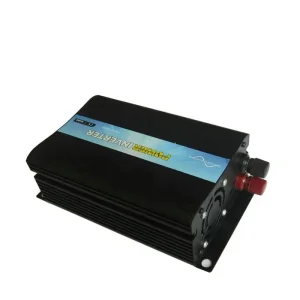
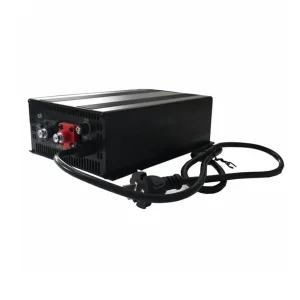
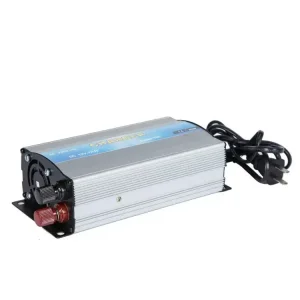
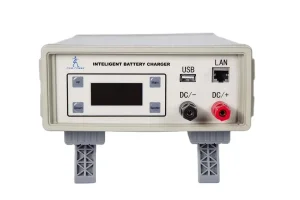
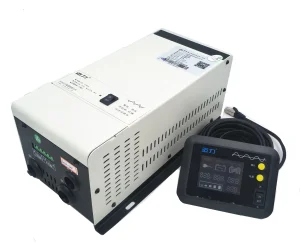
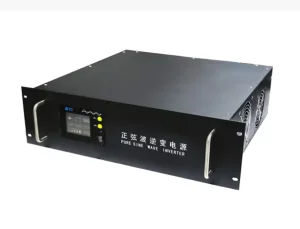
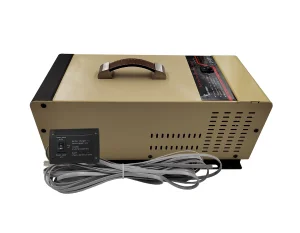
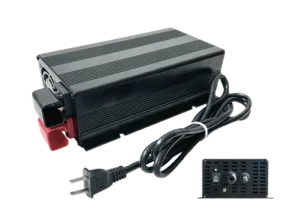
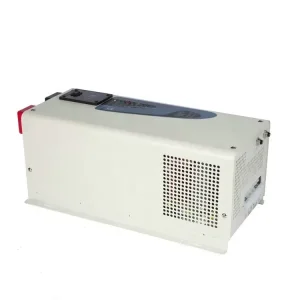
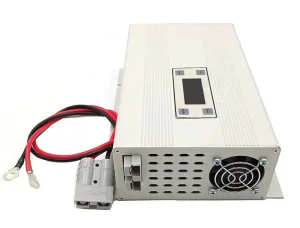
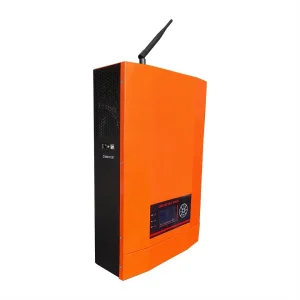
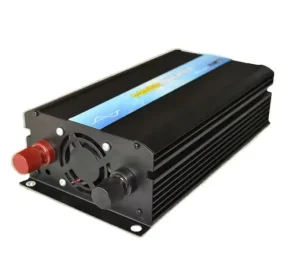
Factory-direct, CE & RoHS certified pure sine wave power conversion platforms engineered for heavy inductive loads, renewable microgrids, and mobile power stations.
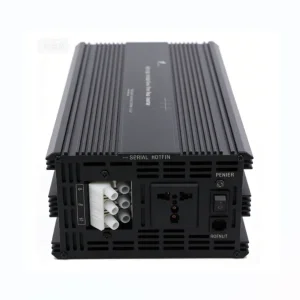
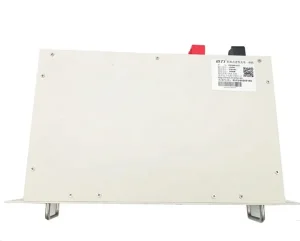
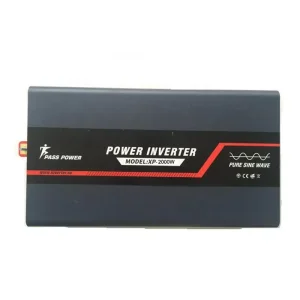
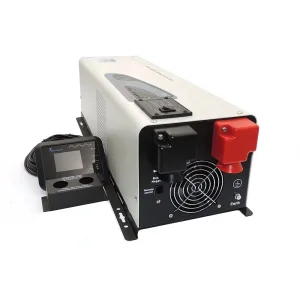
Analyzing global demand trajectories, technological pivots toward high-power density, and the imperative for industrial-grade CE certified power conversion architectures.
The global power electronics landscape is undergoing a structural paradigm shift driven by grid volatility, expanding commercial vehicle electrification, and the rapid deployment of distributed energy storage systems (DESS). Commercial enterprises, telecommunication operators, and emergency infrastructure providers are moving away from traditional modified sine wave equipment. Instead, global B2B procurement is prioritizing high-power CE-certified pure sine wave inverter & charger platforms capable of sustaining continuous heavy loads with Total Harmonic Distortion (THD) under 3%.
Modern industrial complexes, solar microgrids, and electric service vehicle upfitters are increasingly converting from low-voltage DC inputs (12V/24V) to high-voltage DC architectures such as DC 380V. High-voltage power transmission dramatically reduces copper busbar weight, lowers $I^2R$ thermal dissipation losses by up to 85%, and enables seamless integration with high-capacity lithium-ion battery banks. Original Equipment Manufacturers (OEMs) must deliver robust thermal topologies to guarantee uninterrupted operation in extreme ambient conditions.
Evaluating enterprise-level exporter standards, international certification protocols, and manufacturing quality control workflows required for wholesale procurement.
International compliance demands full conformity with the European Union's Low Voltage Directive (LVD EN 62109-1 / EN 62109-2) and Electromagnetic Compatibility (EMC EN 61000-6-1 / EN 61000-6-3). Top-tier exporters validate products via SGS test reports, RoHS lead-free materials, and ISO 9001:2015 certified quality management systems to minimize customs clearance friction.
Global distributors require modular hardware architectures capable of supporting flexible DC inputs (12V, 24V, 48V, 96V, 380V), selectable AC output voltages (110V/120V/220V/230V/240V, 50/60Hz), split-phase configuration, custom LCD displays, and proprietary RS485/CAN-bus communication protocols for Lithium battery BMS handshakes.
Heavy-duty applications mandate rigorous thermal management design: extruded heavy-duty aluminum alloy heat sinks, dual intelligent variable-speed cooling fans, 100% automated SMT circuit assembly, and 100% full-load high-temperature burn-in testing to guarantee long-term operation under demanding continuous duty cycles.
A rigorous comparative engineering evaluation of Low Frequency Toroidal Transformer platforms vs. High Frequency Switching topologies for enterprise deployments.
| Technical Metric / Feature | Low Frequency (Toroidal Transformer) Inverter | High Frequency (MOSFET/IGBT Bridge) Inverter | High Voltage DC (380V DC) Inverter Platform |
|---|---|---|---|
| Primary Topology | Heavy-duty line-frequency copper toroidal core | High-speed PWM switching with compact ferrite core | Direct high-voltage DC bus to AC conversion bridge |
| Surge Capacity Rating | 300% Peak Surge (up to 20 seconds) | 200% Surge (short duration burst < 2 sec) | 250% Peak Surge for high-capacity industrial drives |
| Inductive Load Capability | Exceptional (Compressors, AC units, Power tools) | Moderate (Resistive loads, TVs, Laptops, LED) | Superior (Industrial motors, central HVAC, pumps) |
| Conversion Efficiency | 88% - 92% (High passive stability) | 93% - 96% Peak Efficiency | 95% - 97% (Extremely low current loss) |
| Battery Charging Integration | Heavy-duty 3-Stage Smart Charger (up to 100A+) | Multi-stage compact charger / MPPT integration | Industrial multi-string rack battery charger array |
| Target Deployments | Work trucks, RVs, ambulances, off-grid cabins | Residential solar, portable power, telecom racks | Commercial solar microgrids, factory backup systems |
Modern energy storage installations demand sophisticated battery management logic. Leading pure sine wave inverter chargers incorporate software-driven 3-Stage (Bulk, Absorption, Float) or 8-Stage intelligent charging profiles. These multi-stage profiles feature programmable voltage cut-offs, reverse polarity protection, short-circuit shutdown, low-temperature charging cut-off, and automated desulfation. They are fully optimized for LiFePO4 (Lithium Iron Phosphate), Sealed Lead-Acid (SLA), AGM, and GEL batteries to significantly prolong battery lifespan and ensure zero thermal runaway risk.
For mission-critical operations such as medical emergency vehicles, mobile communication nodes, and sensitive data processing facilities, integrated inverter chargers feature an automatic AC Transfer Switch (ATS). Upon grid or generator failure, the internal high-speed relay automatically transfers load power from utility AC to battery-supplied inverter power in < 10 milliseconds. This seamless transition prevents equipment rebooting, data loss, and operational downtime.
Exploring breakthroughs in Wide Bandgap (WBG) semiconductors, AI-driven dynamic thermal management, and smart grid V2X bidirectional topologies.
The power electronics industry is transitioning toward Silicon Carbide (SiC) MOSFETs and Gallium Nitride (GaN) switching components. By drastically cutting switching losses and handling higher junction temperatures, next-generation high-power inverters achieve power density gains exceeding 35% while shrinking heat sink mass and physical footprint.
Future industrial inverter & charger exporter lines integrate IoT-enabled telemetry modules (Wi-Fi, 4G/5G, RS485 Modbus). Embedded machine learning algorithms continuously monitor capacitor degradation, thermal cycling, and voltage ripple to provide predictive maintenance alerts prior to hardware failure.
Advanced inverter charger topologies are evolving from unidirectional power flow to bidirectional energy hubs. This enables Vehicle-to-Grid (V2G), Vehicle-to-Building (V2B), and smart grid peak-shaving capabilities, transforming commercial fleets and energy storage kits into dynamic grid-stabilizing assets.
Ensuring frictionless international trade, rigorous factory quality control workflows, and comprehensive technical after-sales engineering.
Partnering with an established exporter provides full transparency into the manufacturing workflow. Production begins with automated Surface Mount Technology (SMT) for mainboard assembly, followed by automated optical inspection (AOI) and conformal coating applications to protect against moisture, dust, and salt spray corrosion in marine and tropical environments.
Exporting high-power energy equipment requires strict compliance with international shipping regulations. Our factories supply UN38.3 test documentation, CE certification dossier packages, customized sea/air heavy-duty wooden pallet packaging, and designated HS Code classifications (e.g., HS 85044030) to streamline customs entry.
Expert engineering insights addressing common technical queries from procurement managers, systems integrators, and OEM distributors.
Explore specialized high-frequency solar off-grid inverters, multi-stage smart chargers, ultra-thin vehicle power converters, and rack-mounted backup solutions.