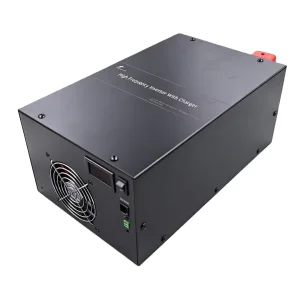
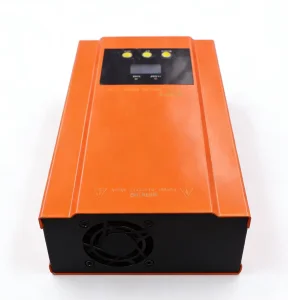
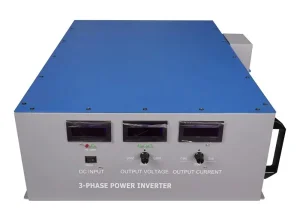
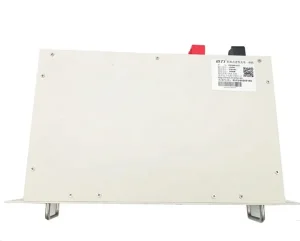
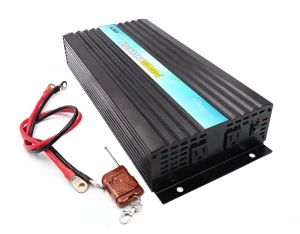
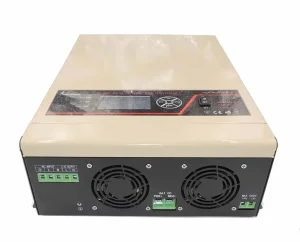
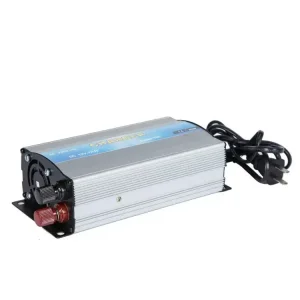
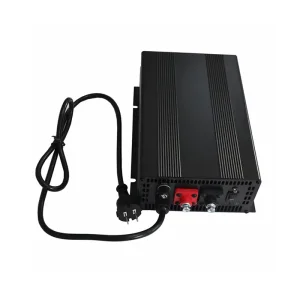
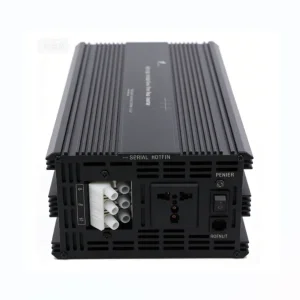
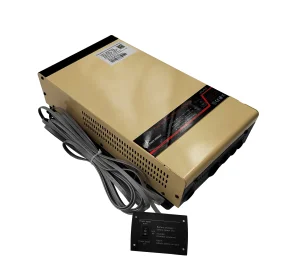
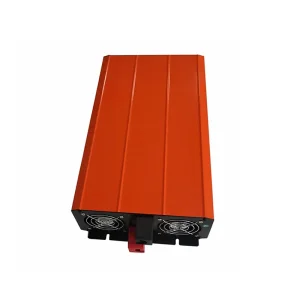
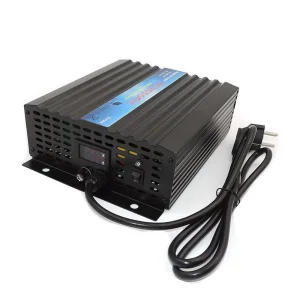
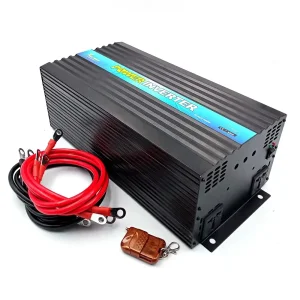
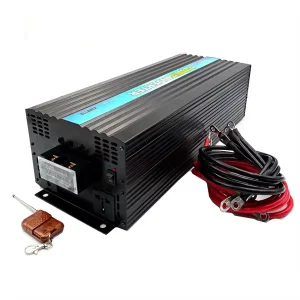
Precision-engineered industrial off-grid inverters, hybrid solar chargers, and intelligent bypass modules optimized for continuous manufacturing and belt load support.
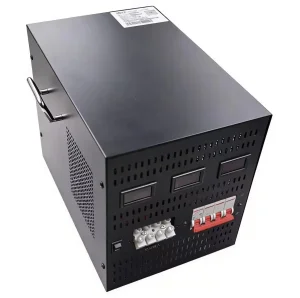
In modern automated manufacturing plants, logistics hubs, and continuous processing facilities, maintaining electrical supply resilience for heavy industrial conveyor belts, motorized assembly lines, and mechanical transport belts is vital to operational profitability.
Strict compliance with EN 62109-1 and EN 61558-2-16 guarantees physical clearance, creepage distances, and high-voltage dielectric isolation between mains belt circuits and DC low-voltage battery lines.
Heavy inductive belt start-ups generate localized electromagnetic interference. Integrated line filter topology neutralizes conduction noise to meet EN 61000-6-2 (Industrial Immunity) and EN 61000-6-4 (Emissions).
Physical double-pole double-throw (DPDT) safety relays prevent backfeeding AC mains into DC inverter stages, fulfilling European machinery safety mandates for autonomous factory floors.
Across international industrial hubs in Germany, the United States, Japan, and Southeast Asia, automated material handling relies heavily on dedicated AC power distribution systems that can balance grid stability with localized battery storage.
Facilities operated by global e-commerce and logistics providers feature miles of high-speed sorting belt conveyors. Power interruptions cause severe physical package pile-ups. Inverter units equipped with separate mains belt bypass allow direct power feed during normal grid conditions while maintaining sub-8ms emergency inverter transition times during blackout events.
In mining environments across Australia and South America, overland conveyor belts run continuously under severe torque loads. OEM factories build industrial low-frequency toroidal transformer inverters capable of delivering up to 300% peak surge power when starting fully loaded ore conveyors from a cold stop.
Continuous sanitation and liquid filling belts require clean sine-wave electricity. Harmonic distortion caused by substandard inverters leads to motor overheating and belt speed jitter. CE-certified power converters deliver clean output (<3% THD) to safeguard sensitive encoder feedback loops.
The power electronics sector is experiencing a massive shift toward wide-bandgap semiconductors, intelligent microgrid communication, and predictive fault diagnostic algorithms.
Replacing legacy IGBTs with SiC MOSFETs elevates conversion efficiency to over 98%, reduces heat dissipation, and enables more compact power converter footprints inside industrial cabinets.
Modern factory belt systems communicate via industrial fieldbus protocols. OEM inverters feature dual RS485/CAN interfaces for real-time telemetry of mains voltage, belt load current, and battery health.
High-speed SCR static switches achieve instantaneous transfer between grid mains feed and internal inverter power, eliminating mechanical relay latency during localized grid drops.
Intelligent microcontrollers sample AC load waveforms at 20 kHz, dynamically adjusting output current thresholds to handle high motor lock-rotor start-ups without tripping secondary breakers.
Deploying power converters with a dedicated mains belt load function requires custom configuration matching regional electrical codes, grid infrastructure, and physical operational environments.
| Parameter | Standard Inverter Pass-Through | Dedicated Mains Belt Load Topology |
|---|---|---|
| Inductive Surge Capacity | 150% - 200% for 2 seconds | 300% continuous surge tolerance on bypass |
| Thermal Isolation | Shared heat sink for inverter & bypass | Thermally segregated mains bypass relay bank |
| Harmonic Contamination | Feedback can disrupt battery charging ICs | Galvanically isolated filtering path |
| CE LVD Compliance Rating | Basic EN 62109 Class I | Industrial Heavy-Duty EN 62109-1 / EN 61000-6-4 |
As a specialized OEM/ODM factory, delivering reliable, certified power electronics involves comprehensive customization ranging from internal PCB layouts to external housing protection ratings.
Factories provide multi-region engineering, supporting DC input rails from 12V, 24V, 48V up to 380V DC, paired with customizable AC output options (110V/120V/220V/230V/380V at 50Hz, 60Hz, or split-phase).
Industrial environments require robust protection. OEM production lines offer rack-mounted chassis, wall-mounted IP30 industrial enclosures, and heavy-duty IP65 powder-coated outdoor steel casings.
Full turnkey export support includes CE certification documentation, ROHS raw material verification, SGS factory audit reports, custom silk-screen branding, and localized LCD firmware interface customization.
Looking ahead toward 2030, the integration of AI-driven predictive maintenance and microgrid energy management will transform industrial belt power systems.
Embedded microprocessors running real-time neural network models will analyze motor startup vibration signatures and current draw patterns, pre-charging internal capacitor banks to eliminate voltage dips when heavy belt loads engage.
Replacing electro-mechanical bypass relays with ultrafast semiconductor solid-state circuit protection will reduce mains transfer interruption times to sub-microsecond levels, completely eliminating arc flashes during short-circuit events.
Future factory belt inverters will not only pass mains power to the load, but will also dynamically feed excess localized solar or kinetic braking energy back to the grid or main factory busbar, optimizing total energy expenditure.
Detailed answers to technical, regulatory, and integration questions regarding CE-certified separate mains belt load inverters.
Comprehensive energy management hardware engineered for industrial belt integration, mobile commercial fleets, and off-grid power storage.