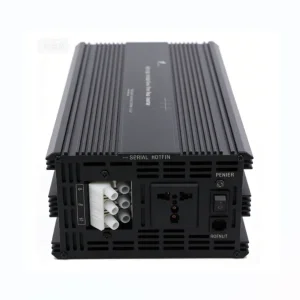
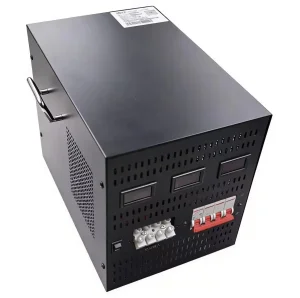
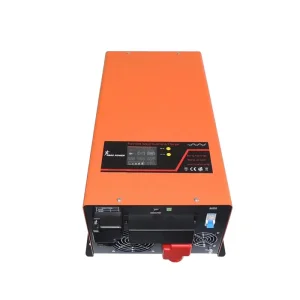
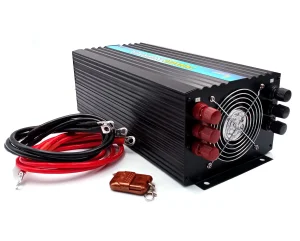
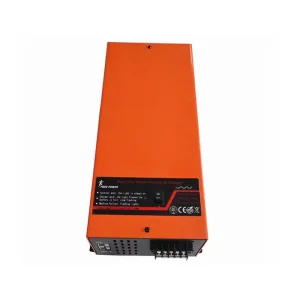
Explore high-performance pure sine wave inverters, hybrid controllers, and low-frequency energy storage solutions.
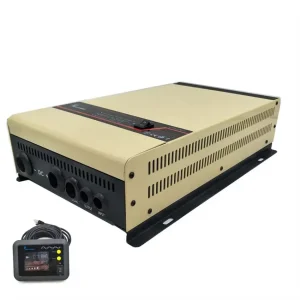
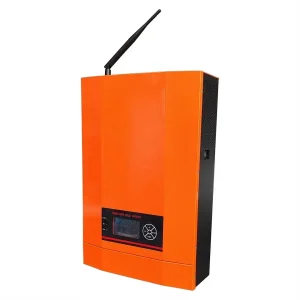
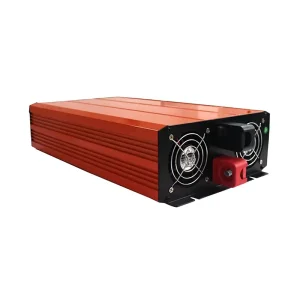
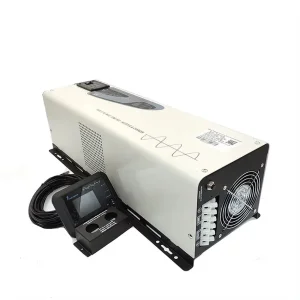
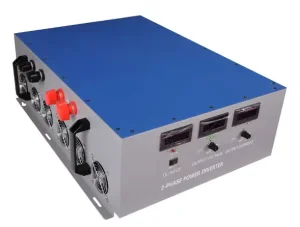
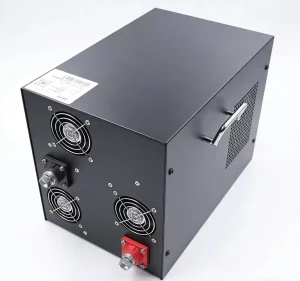
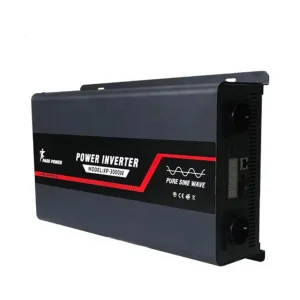
In the rapidly evolving global renewable energy ecosystem, the Deye 12kW Hybrid Inverter stands as a benchmark engineering milestone. Designed to bridge the gap between heavy-duty commercial demand and scalable residential energy storage, this triple-phase/split-phase powerhouse provides grid resilience, peak shaving capabilities, and seamless off-grid transitions. However, global procurement directors and EPC (Engineering, Procurement, and Construction) contractors face a recurring paradox: navigating the commercial term "cheap" without compromising on galvanic safety, thermal dissipation standards, and grid-code compliance.
As a senior power electronics manufacturer and global export authority based in China's advanced manufacturing corridor, our operational insights reveal that cost reduction in modern hybrid inverters is not achieved through substandard component selection. Rather, it is the direct result of architectural integration, automated supply chain clustering, and high-efficiency silicon topology. This whitepaper systematically breaks down the engineering schematics, localized application matrix, manufacturing economics, and regulatory compliance roadmaps for high-capacity 12kW hybrid inverters.
Understanding the internal power conversion pipeline of the Deye 12kW low-voltage (48V) hybrid topology explains why it leads the market in price-to-performance ratio. Unlike traditional high-voltage string inverters, operating a 12kW AC output on a nominal 48V/51.2V Lithium Iron Phosphate (LiFePO4) battery bank demands extraordinary current management—exceeding 240 Amperes continuously.
Equipped with dual independent Maximum Power Point Tracking (MPPT) channels, the inverter supports up to 1.5x DC oversizing (18,000W PV input). This allows multi-orientated rooftop arrays (East-West configurations) to maximize solar yields during early morning and late afternoon hours.
In three-phase commercial and residential grid setups, load distribution across Phase A, B, and C is rarely equal. The Deye 12kW control algorithm permits each individual phase to supply up to 100% rated power (4kW per phase) without causing voltage asymmetry or shutdown.
To integrate existing grid-tie inverters into a battery-backed microgrid, the system utilizes frequency shift power control. When battery State of Charge (SoC) hits 100%, the 12kW inverter elevates output frequency from 50Hz/60Hz to throttle down existing solar string inverters automatically.
Engineering Focus: Low Frequency vs. High Frequency Hybrid Inverter Architectures
While low-frequency inverters rely on heavy iron-core toroidal transformers for peak surge endurance, high-frequency hybrids like the Deye 12kW leverage advanced IGBT (Insulated Gate Bipolar Transistor) switching networks. This yields an exceptional power density, reducing total chassis weight below 35kg while keeping standby power consumption below 50W.
| Electrical Parameter | Deye 12kW Hybrid Standard Specs | High-Frequency Off-Grid Alternate | Low-Frequency Toroidal Unit |
|---|---|---|---|
| Nominal Battery Voltage | 48V / 51.2V Low Voltage | 48V Low Voltage | 24V / 48V Low Voltage |
| Max. PV Input Voltage | 500V DC (160V-800V Operating) | 450V DC | 150V DC (MPPT external) |
| Max. AC Continuous Power | 12,000 W | 8,000 W | 6,000 W - 10,000 W |
| Surge Power Capacity | 2x Rated Power (10s) | 1.5x Rated Power (5s) | 3x Rated Power (20s) |
| Peak Conversion Efficiency | 97.6% (Solar to AC) | 93.5% | 88.0% - 91.0% |
| Paralleling Capability | Up to 16 Units (192kW total) | Up to 6 Units | Requires Manual Sync Module |
A core driver for the immense export demand for Deye 12kW hybrid platforms is their versatility across distinct regional electrical grids. From split-phase 120V/240V systems in North America to three-phase 230V/400V European networks and unstable rural grids in developing nations, localized adaptation is paramount.
In markets relying on 120V/240V split-phase power, the inverter eliminates the need for external auto-transformers. It directly feeds dual 120V busbars while delivering full 240V line-to-line power for heavy central HVAC units, EV chargers, and electrical water heaters.
Operating in 230V/400V 3-phase setups across Germany, the UK, and Australia, the inverter uses smart meter telemetry via RS485/CAN. It automatically executes arbitrage strategies: charging the battery bank at night during low spot-market prices and discharging during peak evening tariffs.
In regions plagued by load shedding and severe grid fluctuations (80V-280V voltage sags), the inverter features a dedicated Generator Port. It can automatically start diesel generators via dry contact signals when battery voltages reach critical thresholds, smoothing power delivery without interruption.
International buyers often associate low pricing with reduced product quality. However, an analysis of the Suzhou and Yangtze River Delta power electronics manufacturing ecosystem reveals that the cost competitiveness of "Cheap Deye 12kw Hybrid Inverters" stems from strategic structural efficiencies rather than engineering shortcuts.
Within a 50-kilometer radius in Eastern China, 95% of core inverter components—including Automotive-grade MOSFETs, magnetic copper cores, aluminum heat sinks, and PCB assemblies—are sourced locally. This eliminates international freight lead times and slashes component procurement costs by 22-30%.
State-of-the-art Surface Mount Technology (SMT) lines combined with automated optical inspection (AOI) reduce manual soldering errors to near zero. Every 12kW unit undergoes 100% full-load thermal burn-in testing under simulated 50°C ambient temperatures prior to export packaging.
By producing tens of thousands of hybrid inverter units monthly, Chinese manufacturers amortize initial NRE (Non-Recurring Engineering) and tooling costs across vast output volumes. Standardizing housing chassis and software stacks across 8kW, 10kW, and 12kW variants further lowers production overhead.
The next decade will see hybrid inverters evolve from passive power conversion units into active, intelligent node managers within Virtual Power Plants (VPPs). Manufacturers are advancing hardware and software roadmaps across three primary vectors:
Replacing traditional Silicon IGBTs with Wide Bandgap Silicon Carbide (SiC) MOSFETs will boost inverter operational switching frequencies from 20kHz to over 100kHz. This dramatically reduces passive magnetic component size, driving total inverter efficiency beyond 98.8%.
Integrating machine learning directly into local firmware allows the inverter to evaluate weather forecasts, historical household consumption behavior, and real-time spot energy pricing to dynamically optimize battery charge schedules automatically.
Future 12kW hybrid topologies will incorporate ISO 15118 V2G protocols, allowing Electric Vehicles (EVs) connected to home chargers to function as secondary battery storage banks, feeding power back through the hybrid inverter during grid blackouts.
Exporting power conversion equipment requires adherence to stringent grid safety and electromagnetic compatibility (EMC) regulations. Leading Chinese manufacturers and exporters ensure all 12kW hybrid models pass rigorous third-party certifications by international bodies such as TÜV Rheinland, Intertek, and SGS.
| Target Region | Mandatory Grid Standards & Safety Certifications | Protection Features Included |
|---|---|---|
| European Union | EN 50549-1, VDE-AR-N 4105, CE LVD, ROHS Directive | Integrated Anti-Islanding, RCD Detection, IP65 Water Protection |
| North America | UL 1741 SA / SB, IEEE 1547-2018, FCC Part 15 Class B | Rapid Shutdown Control, Arc Fault Circuit Interrupter (AFCI) |
| Australia & NZ | AS/NZS 4777.2:2020, AS/NZS 3000 Electrical Installations | DRM0 (Demand Response Mode), Earth Fault Alarm Protection |
| United Kingdom | G99 Issue 1 / Amendment 6 Type Testing | Loss of Mains Protection, Over/Under Frequency Response |
Get authoritative answers directly from OEM engineers regarding installation, paralleling, battery pairing, and export logistics.
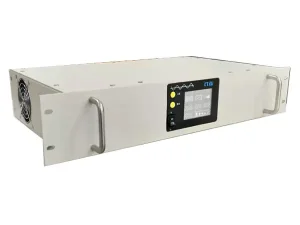
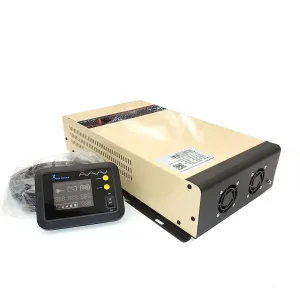
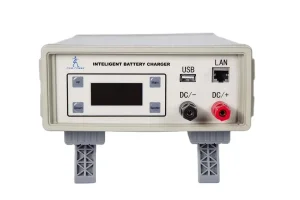
Explore high-voltage converters, rack-mounted chargers, and intelligent multi-stage battery accessories.