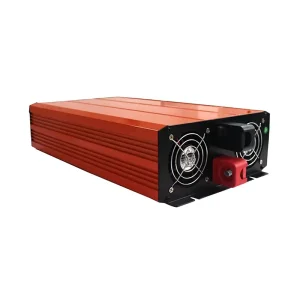
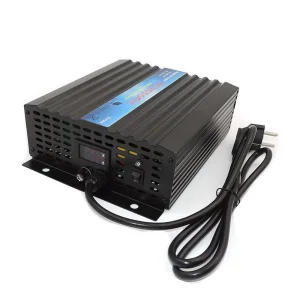
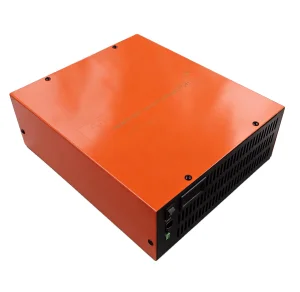
Factory-direct industrial power solutions, high-frequency conversion modules, and smart off-grid charging systems.
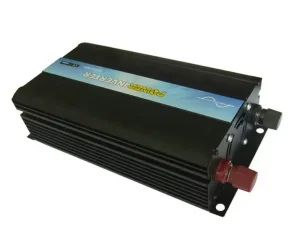
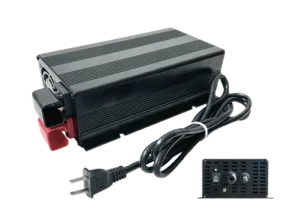
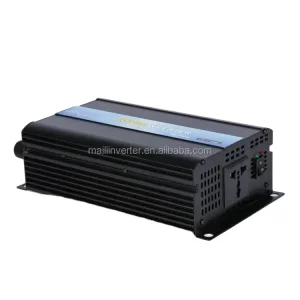
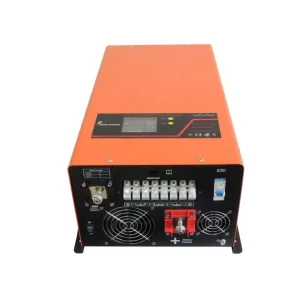
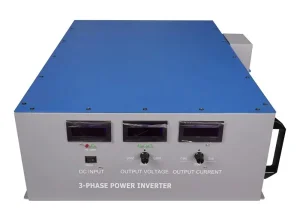
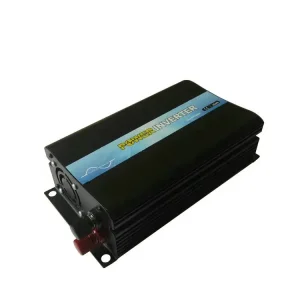
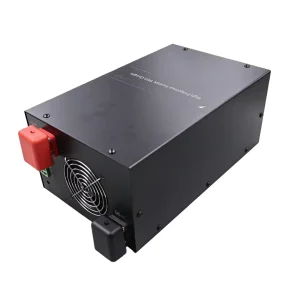
Why 24V DC input at 3000W continuous output represents the engineering benchmark for energy density, thermal performance, and system cost optimization.
In modern off-grid power architecture, marine electrical systems, commercial emergency vehicles, and residential energy storage systems (ESS), selecting the optimum direct current (DC) voltage bus is critical. While 12V DC systems have historically dominated light recreational vehicles, scaling power requirements to 3000 Watts (3kW) continuous load under a 12V architecture creates severe thermal and physical engineering constraints. At 3000W output, a 12V system draws approximately 280 to 310 Amperes of DC current (accounting for power factor and thermal losses). Managing 300A requires massive copper cabling (exceeding 4/0 AWG), generates significant resistive heat ($I^2R$ power loss), and accelerates terminal degradation.
Transitioning to a 24V DC architecture for 3000W custom power inverters effectively cuts the continuous operating current in half (~135A to 150A max). By Ohm’s Law and Joule's First Law ($P_{loss} = I^2R$), halving the current reduces thermal dissipation losses across internal copper traces, MOSFET switches, and external cabling by a factor of four (75% reduction in copper resistive losses). This significant gain in thermal headroom allows OEM power engineers to achieve compact chassis designs, higher continuous power retention at elevated ambient temperatures (+50°C), and extended operational lifespans for critical components like electrolyte capacitors and switching transistors.
Key technology shifts transforming off-grid electrification, battery chemistry integration, and digital power conversion.
Traditional inverters were calibrated for lead-acid discharge curves (10.5V - 14.4V). Modern 24V custom inverters feature micro-processor profile algorithms explicitly optimized for Lithium Iron Phosphate ($LiFePO_4$) 8S configurations (nominal 25.6V, operating window 22.4V to 29.2V). This includes custom low-voltage disconnect (LVD) safeguards to prevent BMS battery shutdown triggers.
The industrial power sector is rapidly shifting from legacy Silicon MOSFETs to Silicon Carbide (SiC) and Gallium Nitride (GaN) switching devices. In 3000W 24V topologies, SiC devices allow switching frequencies above 100 kHz, reducing transformer toroidal footprint by up to 40% while pushing total DC-to-AC peak efficiency past 95.5%.
Commercial procurement managers require real-time system visibility. Current 3000W custom inverter designs integrate native RS485, CANbus 2.0B, and Bluetooth LE connectivity, enabling direct integration into RV-C bus systems, marine NMEA 2000 networks, and centralized industrial telemetry dashboards.
| Engineering Metric | 12V DC System (3000W) | 24V DC System (3000W Sweet Spot) | 48V DC System (3000W) |
|---|---|---|---|
| Continuous DC Current | ~280A - 310A | ~135A - 150A | ~65A - 75A |
| Min. Recommended Wire Gauge (10ft) | 4/0 AWG (Heavy / Expensive) | 1/0 AWG or 2 AWG (Optimal) | 6 AWG or 4 AWG |
| Relative $I^2R$ Cable Copper Loss | 100% (Baseline high heat) | 25% (75% loss reduction) | 6.25% |
| System Energy Density & Cost | High weight, thick copper busbars | Lowest total cost / weight ratio | Requires higher battery series complexity |
| Inverter Transformer Sizing | Bulky primary windings | Balanced coil turns & heat sink size | Compact windings |
Deciphering B2B purchasing criteria for tier-1 distributors, system integrators, vehicle OEMs, and solar developers.
When enterprise procurement teams evaluate vendor options for Custom Inverter 3000W 24V products, their purchasing criteria extend far beyond simple price-per-watt calculations. System reliability, duty-cycle stability under harsh operating environments, risk mitigation, and compliance longevity form the core framework of B2B procurement decision-making.
Enterprise buyers serving mobile trade fleets or off-grid construction sites require sustained surge performance. Inductive loads like compressors, power saws, and air conditioners exhibit initial locked-rotor inrush currents up to 300% of nominal rating. Custom 3000W inverters must provide 6000W to 9000W peak surge output for at least 5 to 10 seconds without dropping AC output voltage below 10% nominal threshold.
Off-the-shelf inverters rarely meet specialized vehicle or housing constraints. Procurement demands modular flexibility: custom housing colors, personalized silk-screen brand logo placement, tailored AC output socket standards (GFCI US, Schuko EU, Universal, NEMA L6-30), customized wiring terminal blocks, and custom firmware parameters for charging currents.
High industrial MTBF (Mean Time Between Failures > 100,000 Hours) requires active intelligent cooling algorithms. Procurement managers scrutinize thermal heat sink design, variable-speed dual ball-bearing cooling fans, conformal PCB coating for anti-corrosion, and heavy-duty aluminum extruded casings built for high-vibration mobile applications.
Deploying custom 3000W 24V inverters across mission-critical, off-grid, and commercial application environments.
In luxury motorhomes, overland rigs, and yachts, a custom 3000W 24V inverter charger functions as the core power hub. Featuring an integrated automatic transfer switch (ATS < 10ms transfer speed), it seamlessly seamlessly switches between grid shore power, generator input, and 24V battery bank power while operating rooftop air conditioners, induction cooktops, and microwave ovens simultaneously.
Utility repair vehicles, mobile medical units, and emergency command trucks demand clean pure sine wave power (THD < 2.5%) to prevent harmonic distortion on sensitive diagnostic instruments, power tools, and laser equipment. Galvanic isolation between DC input and AC output prevents vehicle chassis ground loops and stray electrical interference.
Combining a 3000W 24V inverter with integrated MPPT solar charge controllers (e.g., 60A - 100A MPPT) forms a unified hybrid energy station for remote telecom towers, cabin power systems, and agricultural water pumping station electrification, maximizing solar harvesting efficiency even during overcast ambient weather.
Navigating complex international electrical safety standards, electromagnetic compatibility (EMC), and regional grid codes.
Exporting power electronics globally requires meticulous attention to regional certification mandates. A non-compliant power inverter risks custom border seizures, heavy regulatory fines, and end-user safety liability. Custom 3000W 24V inverters designed for international B2B deployment must adhere to rigorous international test standards across major geographical regions:
For markets in the United States and Canada, custom 3000W 24V inverters must meet UL 458 (for power converters/inverters in land vehicles and recreational vehicles) or UL 1741 / CSA C22.2 (for standalone energy systems). Electromagnetic emissions must strictly comply with FCC Part 15 Subpart B, Class B limits to guarantee zero radio frequency interference with onboard navigation, VHF radios, and cellular signal amplifiers.
European deployment mandates the CE Mark, encompassing the Low Voltage Directive (LVD EN 62368-1 / EN 62109-1) for electrical safety and the Electromagnetic Compatibility Directive (EMC EN 55032 / EN 55035). Automotive installations require additional ECE R10 (E-Mark) automotive homologation approval to certify immunity against electrical transient surges during vehicle alternator load-dumps.
Looking ahead at next-generation power electronics, solid-state battery compatibility, and AI-driven predictive power topology.
The power electronics landscape is accelerating towards unprecedented efficiency, digital miniaturization, and intelligent grid interaction. Over the next five years, custom 3000W 24V power conversion platforms will evolve along four key technological axes:
Replacing bulky wire-wound toroidal transformers with multi-layer printed circuit board (PCB) planar transformers will cut inverter chassis height by over 50%. This flat-profile design allows ultra-thin under-seat or chassis-recessed installation inside commercial vehicle cabs and compact off-grid power enclosures.
Integrating micro-edge AI microcontrollers directly on the inverter control board allows real-time waveform synthesis that dynamically adapts switching algorithms based on connected load characteristics. Whether driving a purely capacitive electronic load or a highly inductive motor, the inverter continuously tunes its Dead-Time compensation to eliminate switching spikes, minimize heat generation, and maintain pristine sine wave fidelity under rapid load steps.
Future 24V inverter platforms will incorporate bi-directional high-frequency dual-active-bridge (DAB) converters. This enables the same 3000W unit to operate as a step-up AC-to-DC battery charger during shore power availability and automatically revert to a DC-to-AC grid-support inverter during localized utility blackouts.
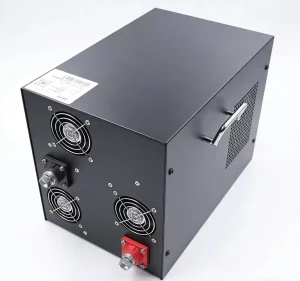
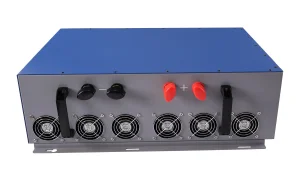
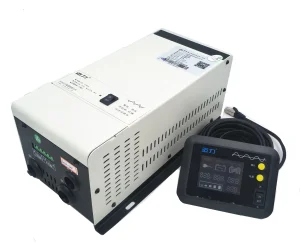
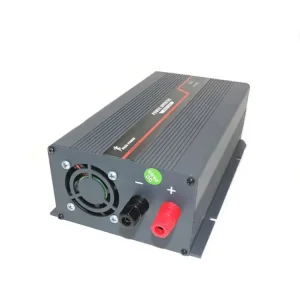
High-voltage pure sine wave systems, heavy-duty smart battery chargers, and multi-phase power modules.
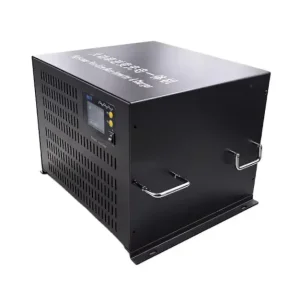
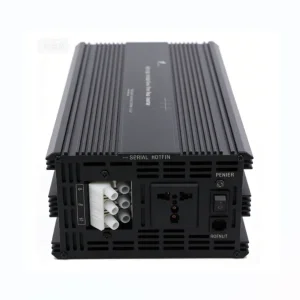
Expert answers to complex technical and procurement questions surrounding 3000W 24V custom inverter designs.