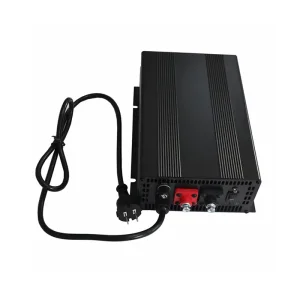
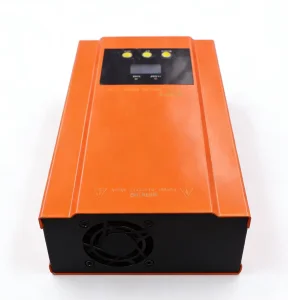
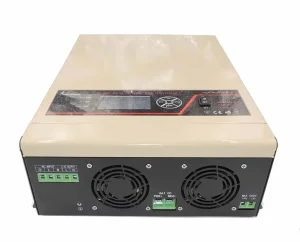
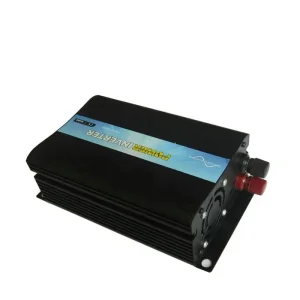
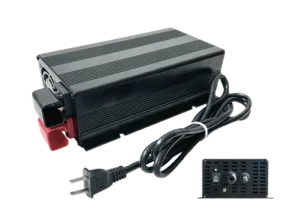
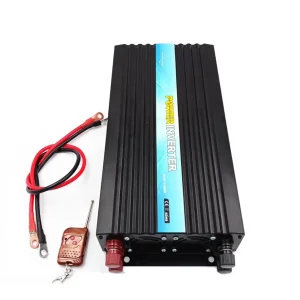
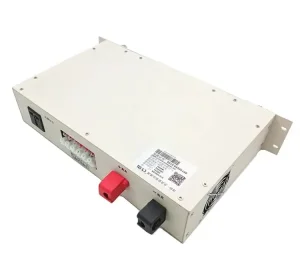
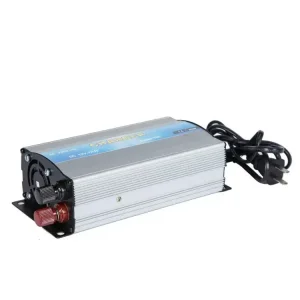
Engineered for maximum reliability, thermal endurance, and strict compliance with international electric standards (CE, RoHS, CB, SAA).
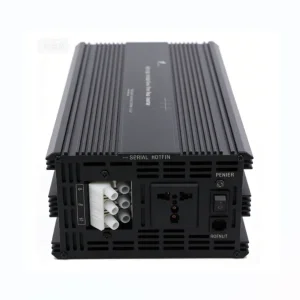
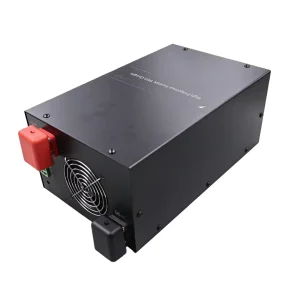
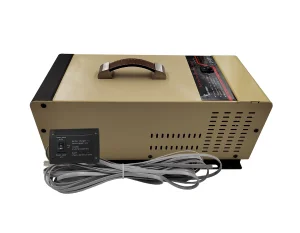
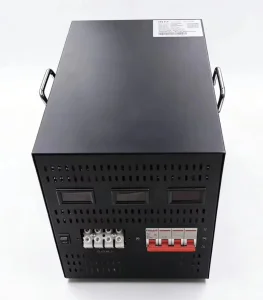
Analyzing key macroeconomic vectors, off-grid electrification mandates, and grid-resilience requirements shaping B2B inverter procurement in 2026 and beyond.
The global energy landscape is undergoing an unprecedented structural transition toward decentralized power architectures. Off-grid renewable installations, microgrids, and Commercial & Industrial (C&I) energy storage systems are no longer secondary alternatives; they are critical infrastructure components in regions experiencing grid instability, severe climatic events, or rapid industrial expansion. As a leading manufacturer and direct exporter of Must Solar Inverter units and custom off-grid power solutions, our engineering roadmap addresses the core challenges faced by systemic EPC contractors, equipment distributors, and OEM system integrators.
Over the past decade, solar inverter export dynamics have shifted dramatically from basic DC-to-AC conversion devices toward multi-source energy management hubs. Modern installations require intelligent power converters capable of dynamically balancing photovoltaic (PV) input, electrochemical energy storage (LiFePO4, Lead-Acid, AGM), auxiliary diesel generator feeds, and primary utility grids. In emerging economies across Latin America, Sub-Saharan Africa, Southeast Asia, and Central Asia, the demand focuses heavily on high-surge low-frequency inverters equipped with toroidal transformers to handle heavy inductive motor loads. Conversely, developed markets demand ultra-high efficiency high-frequency hybrid topologies with integrated Maximum Power Point Tracking (MPPT) controllers and smart grid compliance (UL 1741 SA, IEEE 1547-2026, IEC 62109).
Unlike standard consumer-grade power converters, enterprise-grade Must Solar Inverters integrate multi-stage digital signal processing (DSP) control loops, galvanic isolation, zero-crossing switching protocols, and active thermal dissipators. This guarantees continuous operational readiness under high ambient temperature profiles (+55°C) without thermal derating, ensuring long-term project bankability and reduced Levelized Cost of Energy (LCOE).
Evaluating High-Frequency Switch-Mode vs Low-Frequency Galvanic Toroidal Inverter Topologies for Targeted Field Performance.
| Performance Vector | High-Frequency Switch-Mode Inverters | Low-Frequency Toroidal Transformer Inverters | Hybrid Bi-Directional MPPT Systems |
|---|---|---|---|
| Primary Application | Sensitive electronics, light residential, space-constrained mobile setups | Heavy inductive loads, compressors, pumps, industrial motors, RV AC units | C&I Microgrids, self-consumption solar storage, hybrid backup |
| Surge Capacity Rating | 150% - 200% (Duration < 20ms) | 300% Peak Surge (Duration 5 - 10 Seconds) | 200% - 250% (Smart electronic limiting) |
| Peak Efficiency Curve | Up to 95% - 97% | Up to 88% - 92% | 98.6% (DC-to-AC) / 99.5% (MPPT) |
| Total Harmonic Distortion (THD) | < 3% (Pure Sine Wave) | < 2.5% (Ultra-clean electromagnetic smoothing) | < 2% (Advanced DSP Waveform Synthesis) |
| Weight / Form Factor | Lightweight, compact enclosure | Heavy-duty, high copper density frame | Modular wall-mount / rack-mount configuration |
| Battery Voltage Range | 12V / 24V / 48V DC | 12V / 24V / 48V / 96V DC | 48V Low Voltage to 380V High Voltage DC |
Next-generation inverter stages utilize Silicon Carbide (SiC) MOSFETs, reducing switching losses by 60%, drastically cutting heat generation, and elevating system power density.
Real-time dynamic sweeping algorithm tracks multi-peak power curves under partial shading or rapid cloud movement, maintaining > 99.5% solar harvesting accuracy.
Built-in Modbus, CAN-bus, and Wi-Fi/4G telemetry allow seamless integration into Virtual Power Plants (VPPs) for automated peak shaving and frequency regulation.
Field-proven deployments engineered to solve regional grid shortcomings, extreme environmental conditions, and specialized load demands.
Cellular towers located in remote mountain ranges or deserts demand 24/7/365 uninterruptible power. Must high-efficiency hybrid inverters manage dual DC inputs from solar arrays and battery banks with zero downtime. Integrated dry contact terminals automatically initiate auxiliary diesel generators only when battery state-of-charge (SoC) drops below designated thresholds, cutting operational fuel consumption by over 65%.
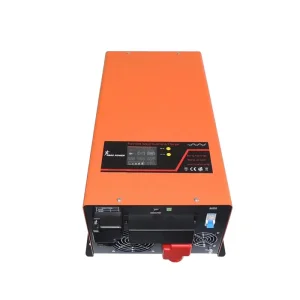
Mobile emergency units, overland expedition RVs, and service trucks present intense vibration, space limitations, and high inductive starting currents (e.g., roof-top air conditioners, medical compressors). Low-frequency pure sine wave inverter chargers with custom ultra-thin designs and integrated dual battery isolators deliver high surge capacity while isolating starter batteries from auxiliary lithium battery banks.
Manufacturing facilities facing steep time-of-use (TOU) electricity tariffs leverage multi-phase 9000W to 50kW rack-mounted parallel inverter arrays. Systems automatically store low-cost solar or grid energy during off-peak hours and discharge during peak demand periods, effectively reducing demand charges while providing back-up UPS power during total blackout scenarios.
Direct DC-to-AC conversion from high-voltage photovoltaic arrays (380V DC) directly powers 3-phase submersible irrigation pumps without requiring costly step-up transformers or heavy battery banks. Soft-start technology eliminates destructive mechanical shock on pump impellers, maximizing motor longevity in remote agricultural installations.
Comprehensive customization parameters tailored to brand specifications, localized grid codes, and OEM enclosure requirements under ISO 9001:2015 quality standards.
Our manufacturing facility in Suzhou spans over 2,770 square meters of specialized electronic assembly, automated SMT lines, toroidal transformer winding stations, and full-load burn-in testing chambers. Every Must Solar Inverter undergoes rigorous environmental testing, thermal imaging, and 100% full-power aging prior to global export. We work closely with international distributors and brand owners to provide tailor-made power electronics across 8 key customization dimensions:
Standard 12V, 24V, and 48V DC platforms extended to custom high-voltage 72V, 96V, and 380V DC inputs for specialized industrial transport and telecom backbones.
Single Phase (110V/120V/220V/230V/240V), Split Phase (120V/240V), and 3-Phase (190V/380V/415V) outputs at precise 50Hz or 60Hz frequency configurations.
Programmable multi-stage CC/CV charging curves fully optimized for LiFePO4, NMC, AGM, Gel, and flooded lead-acid battery chemistry profiles.
Full customization of RS485, RS232, CAN-bus, SNMP, and custom BMS handshake protocols (Pylontech, Volthium, Victron compatible).
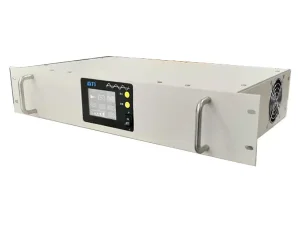
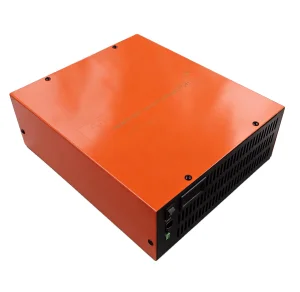
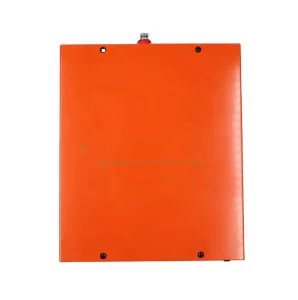
Custom sheet metal, ultra-thin micro form factors, rack-mounted 19-inch chassis, and IP30 to IP65 weather-proof outdoor enclosures.
Universal, US NEMA, EU Schuko, UK, Australian, and industrial Anderson terminal block inputs/outputs customized per region.
Key regulatory compliance, technological convergence, and sustainability imperatives driving global solar inverter demand.
As international solar markets mature, regulatory scrutiny regarding inverter safety, electromagnetic compatibility (EMC), and grid connectivity is tightening. Exporters must navigate evolving international standards to prevent trade friction and ensure market entry:
Field data collected across 40+ export destinations demonstrates that heat stress is the primary failure mode for power electronics. Our Must Solar Inverter designs feature heavy-duty extruded aluminum heatsinks, intelligent dual-ball-bearing cooling fans, and conformal PCB coating to guard against salt spray, high humidity, and airborne dust particles.
In-depth engineering answers to common procurement, installation, and performance queries for system integrators.
Low-frequency inverters rely on a heavy toroidal iron transformer operating at 50Hz/60Hz. This provides immense physical surge capacity (up to 300% peak rating) and galvanic isolation, making them ideal for heavy motor loads like air conditioners, pumps, and power tools. High-frequency inverters use electronic pulse-width modulation (PWM) with compact high-frequency transformers, delivering lighter weight, smaller footprints, and higher efficiency for electronics and resistive loads.
Maximum Power Point Tracking (MPPT) continuously monitors the voltage and current output of solar panels to calculate the peak operational point (Vmp). It converts excess PV voltage into additional charging current. This yields 25% to 30% higher energy efficiency compared to Pulse Width Modulation (PWM) controllers, particularly during overcast conditions or cold climates where array voltages vary significantly.
Yes. All current generation hybrid and off-grid inverter chargers feature user-programmable charging parameters and dedicated Lithium profiles. When connected via RS485 or CAN-bus, the inverter communicates directly with the battery BMS to adjust charging rate, manage low-temperature cutoffs, and prevent over-discharge.
Must solar inverter chargers feature an internal automatic transfer switch (ATS) with a transfer time of less than 10 milliseconds (< 10ms) in UPS mode. This imperceptible delay ensures desktop computers, servers, networking hardware, and sensitive medical equipment remain online without rebooting.
Select 4kW, 5.5kW, 6kW, and 9kW models support parallel stacking up to 9 to 12 units. They can be configured to produce high-capacity single-phase output, 120V/240V split-phase power for North American applications, or 3-phase 380V/415V commercial power for industrial machinery.
We provide end-to-end OEM customization, including custom branding on LCD faceplates, custom housing colors, customized input/output voltage settings, specialized firmware programming, regional socket selection, and customized master carton packaging.
Explore our multi-stage intelligent chargers, high-efficiency MPPT controllers, and custom pure sine wave power converters.