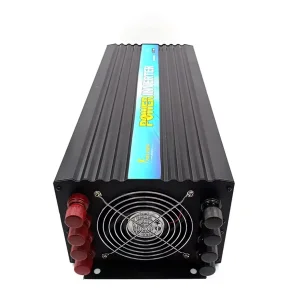
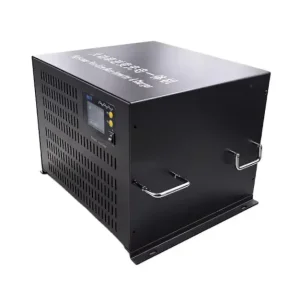
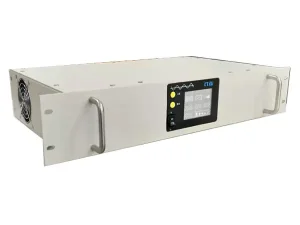
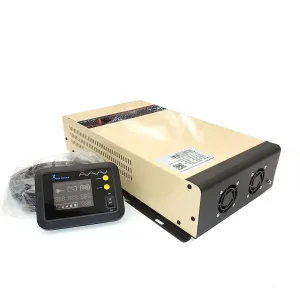
Engineered for high reliability, maximum power conversion efficiency, and extreme thermal resilience in demanding fleet operations.
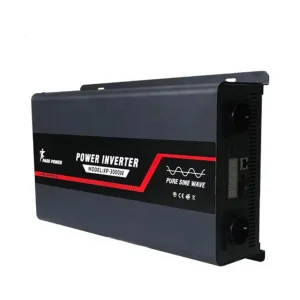
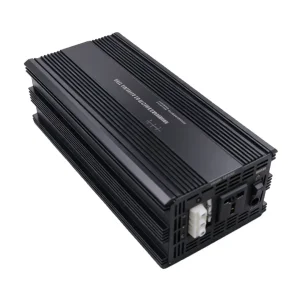
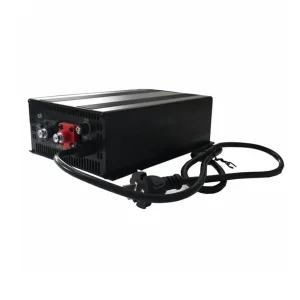
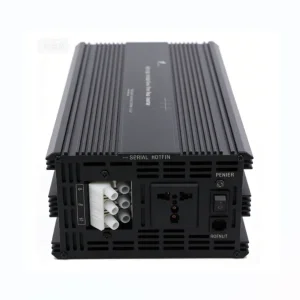
An in-depth analysis of the shift from legacy flooded lead-acid chemistry to high-density Lithium Iron Phosphate (LiFePO4) architecture in commercial fleets.
The global light electric vehicle (LEV) market is undergoing a structural transition. Golf carts, resort transport vehicles, commercial turf equipment, and off-highway utility vehicles (UTVs) are rapidly standardizing on 48V DC nominal electrical architectures. Historical reliance on 36V or low-voltage setups has given way to 48V systems due to optimal current efficiency, reduced cable copper mass, and superior thermal characteristics during sustained load scenarios.
Concurrently, golf fleet management companies, hospitality chains, and industrial facility operators are executing aggressive battery retrofits. The migration from traditional Deep-Cycle Flooded Lead-Acid (FLA) to advanced Lithium Iron Phosphate (LiFePO4) chemistry requires a complete overhaul of the charging infrastructure. Legacy transformer-based "dumb" chargers lack the precise micro-processor algorithms necessary to prevent thermal runaway, prevent overcharging cell degradation, or interface with integrated Battery Management Systems (BMS).
Lithium Iron Phosphate batteries demand precise CC/CV (Constant Current / Constant Voltage) charge profiles with zero-voltage wake-up triggers for depleted protection boards.
Modern 48V battery chargers feature CAN 2.0B protocol integration, allowing dynamic handshake voltage adjustments based on real-time cell temperatures and voltages.
Commercial fleets require IP67 waterproof enclosure designs, fully potted electronics, and vibration resistance built to withstand harsh turf and coastal environments.
Understanding how active Power Factor Correction (PFC) and Silicon Carbide (SiC) MOSFETs reduce total operational cost for large-scale fleets.
As a specialized wholesale 48V golf cart battery charger supplier and exporter, our engineering focus centers on high-frequency Resonance LLC topology combined with active PFC (Power Factor Correction > 0.99). Traditional low-frequency chargers suffer from bulky line transformers, heavy copper loss, and efficiency ratings below 75%. In contrast, modern high-frequency chargers achieve operational efficiencies exceeding 94-95%, significantly cutting energy utility expenditures across multi-cart charging bays.
Depending on battery bank chemistry, proper voltage termination is essential to maximize cycle lifetime (reaching 3,500+ cycles for LiFePO4 and extending AGM longevity). Below is a structural technical breakdown of industrial 48V charging profiles:
| Charging Phase | Lithium Iron Phosphate (LiFePO4) | AGM / Gel Lead-Acid | Flooded Lead-Acid (FLA) |
|---|---|---|---|
| Phase 1: Pre-Charge / Soft Start | 0.1C current check for BMS lock restoration | Low current trickle to test cell health | Desulfation pulse stage |
| Phase 2: Bulk (Constant Current) | Max rated current (e.g., 15A - 30A) up to 56.8V | Constant current up to 57.6V | Full current up to 58.8V |
| Phase 3: Absorption (Constant Voltage) | CV at 58.4V until current drops to 0.05C | CV held for 2-3 hours with decay check | CV held to allow complete gassing |
| Phase 4: Equalization / Finish | BMS cell balancing handshake phase | Disabled to prevent grid drying | Controlled overcharge pulse (60V) |
| Phase 5: Standby / Auto-Restart | Zero-current float with voltage hysteresis restart | Float voltage maintained at 54.0V | Float maintenance charge at 53.5V |
Modern lithium battery packs often enter "sleep mode" or trip their internal protection circuits (BMS) due to over-discharge. Standard market chargers fail to recognize the open circuit voltage and refuse to output current. Our industrial-grade 48V chargers feature a specialized pulse wake-up signal that resets the BMS logic board and safely initiates soft-start recovery charging without manual intervention.
Enabling regional distributors, vehicle assemblers, and golf club resort operators to deploy tailored charging solutions.
Custom plug configurations available including EZGO 3-Pin, Club Car Triangular/3-Pin round, Yamaha 2-Pin/JW9, Anderson SB50/SB170, and custom M12/M19 aviation connectors.
Universal AC input ranges (90V-264V AC, 45Hz-65Hz) ensure seamless global deployment across North America (110V/120V), Europe/Asia (220V/230V), and unstable grid zones.
Dual-purpose thermal chassis designs enable both portable bench-top use with ergonomic handles or permanent vehicle chassis installation with anti-vibration rubber dampers.
When procuring 48V battery chargers at scale, buyers must look beyond initial unit costs. Low-quality chargers with inferior thermal design often experience failure rates exceeding 8% annually in tropical or high-duty environments. This causes expensive vehicle downtime, battery cell degradation due to unbalanced charging, and elevated labor replacement costs.
Our export-grade chargers utilize premium Japanese Nippon Chemi-Con capacitors, Infineon MOSFETs, and heavy-duty aluminum die-cast heat-dissipation casings. By reducing total heat build-up and delivering stable ripple currents (<1%), our chargers help extend battery pack lifespan by up to 30%, delivering substantial net savings across 5-year fleet operational cycles.
Tailored power electronics configured for specialized operational ecosystems around the globe.
Multi-bay charging stations equipped with central power management, staggered start timers to reduce peak demand utility charges, and real-time charging status LEDs for resort staff.
Heavy-duty, high-amperage 48V chargers (20A to 30A output) designed for fast-opportunity charging during worker shifts on industrial mowers and burden carriers.
Ruggedized, IP67-sealed chargers integrated directly into 48V passenger tugs and baggage carts, fully protected against rain, aviation fuel vapor, and physical impact.
Direct DC-DC and DC-AC hybrid charging compatibility for eco-resorts utilizing solar PV arrays with battery energy storage systems (BESS) for clean fleet maintenance.
Ensuring compliance with stringent North American, European, and Asia-Pacific electrical safety mandates.
Navigating global customs and regional safety regulations is critical for importers and original equipment manufacturers. Our manufacturing processes strictly adhere to ISO 9001:2015 quality control frameworks. Every unit produced undergoes 100% full-load burn-in testing, high-voltage insulation tests, and automated computer-controlled function testing before packaging.
Full alignment with UL 1564 (Industrial Battery Chargers), UL 2202, and FCC Part 15 Class B electromagnetic interference rules for smooth US and Canadian market clearance.
Certified CE marking encompassing Low Voltage Directive (LVD 2014/35/EU), Electromagnetic Compatibility (EMC 2014/30/EU), and RoHS chemical restriction standards.
Built-in protections: Over-Voltage (OVP), Over-Current (OCP), Reverse Polarity Spark Protection, Short-Circuit Cutoff (SCP), and Dual Internal Thermistor Over-Temp Cutoff (OTP).
Pioneering wide-bandgap semiconductors, cloud telemetry, and wireless charging infrastructure.
As a technology-first 48V golf cart battery charger supplier and exporter, our R&D engineering division is actively pursuing three key technology vectors to define the next decade of LEV energy infrastructure:
By transitioning from silicon MOSFETs to GaN and SiC power devices, future charger generations will achieve switching frequencies above 500 kHz. This reduces internal inductor size by 40%, boosting overall efficiency toward 97% while shrinking total chassis volume.
Integrating 4G LTE-M and Bluetooth Mesh modules directly into industrial chargers allows fleet managers to remotely monitor state-of-charge (SoC), track kWh consumption, predict battery health degradation, and receive automated maintenance alerts via cloud dashboards.
Eliminating physical cables altogether, our forward-looking engineering roadmap includes automated ground pad wireless charging systems for golf carts and autonomous turf vehicles, delivering seamless hands-free charging whenever carts park over bay pads.
Direct technical answers addressing procurement, installation, compatibility, and ordering logistics.
Complete your fleet power system with our broader range of high-frequency and low-frequency pure sine wave inverters, chargers, and solar converters.