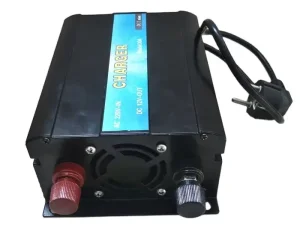
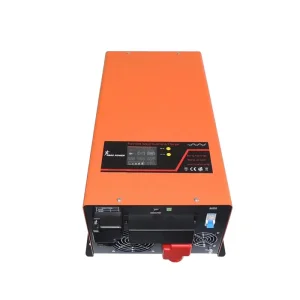
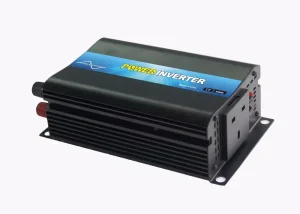
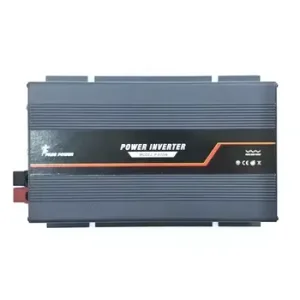
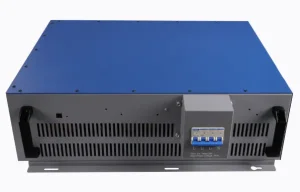
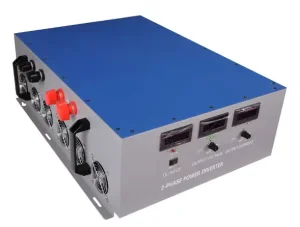
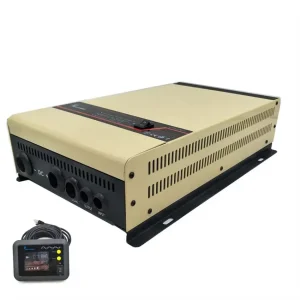
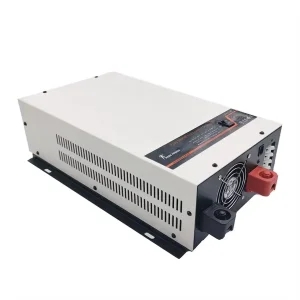
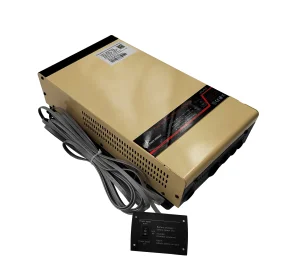
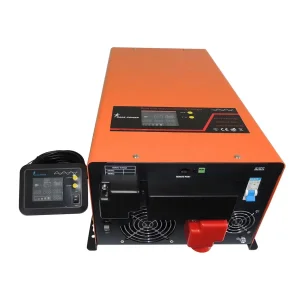
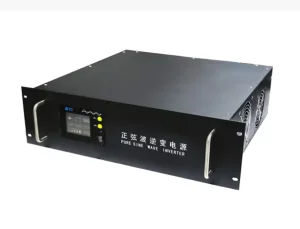
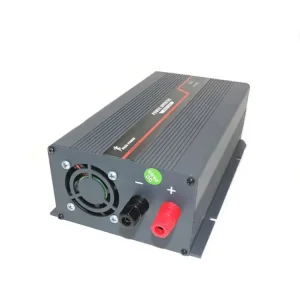
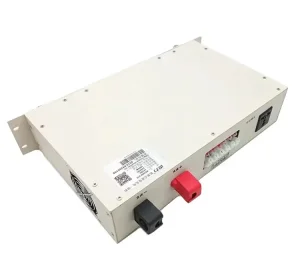
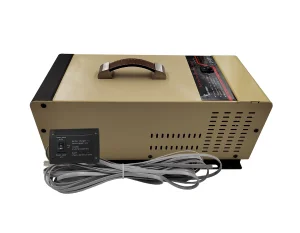
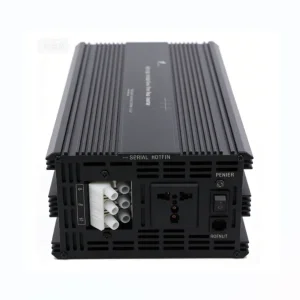
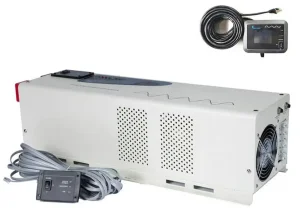
Direct-from-factory pure sine wave, hybrid MPPT, and low-frequency off-grid inverter platforms engineered for industrial, commercial, and residential applications.
A comprehensive analysis of topology choices, thermal design, BMS handshakes, and efficiency optimization in industrial-grade low-voltage hybrid inverter systems.
Why 48V DC Architecture Dominates Modern Energy Storage: In the spectrum of low-voltage (LV) power electronics, 48V DC represents the sweet spot balancing Safety Extra Low Voltage (SELV) compliance (under 60V DC limit) and copper conductor optimization. Lowering system current relative to 12V/24V systems drastically decreases $I^2R$ thermal losses by up to 75%, allowing commercial facilities and off-grid residential setups to scale power capacities up to 15kW–20kW without exceeding safe wire gauges or incurring prohibitive wiring costs.
Modern 48V hybrid inverters utilize sophisticated bidirectional power conversion stages. During photovoltaic (PV) generation or grid off-peak windows, the DC-DC stage operates in buck mode to charge 48V LiFePO4 battery banks via MPPT (Maximum Power Point Tracking) algorithms with efficiency ratings topping 99%. During grid outages or peak-tariff discharge cycles, the stage seamlessly shifts to boost mode, feeding a high-frequency H-bridge or a heavy-duty toroidal transformer stage to supply ultra-clean pure sine wave AC output.
Low-Frequency (LF) vs. High-Frequency (HF): LF designs incorporate robust toroidal transformers providing galvanic isolation and immense inductive surge protection (essential for motor loads, HVAC, compressor start-ups), whereas HF transformerless platforms offer compact footprint, lighter weight, and ultra-high dynamic response for office IT and telecommunication loads.
To ensure battery cell longevity and operational safety, modern 48V hybrid inverters abandon passive voltage-based charging in favor of active closed-loop communication over RS485 or CAN-bus protocols. The inverter dynamically queries the Battery Management System (BMS) for real-time parameters including state-of-charge (SOC), maximum allowable charge/discharge current limits, temperature flags, and individual cell voltage balance metrics.
Through standard industry protocols (such as Pylontech, Victron, Growatt, or customized Modbus RTU standards), the inverter dynamically throttles charge currents to prevent thermal runaway, automatically balancing fast-charge demand with float-stage cell preservation.
Inside China's advanced manufacturing hubs in Jiangsu (Suzhou) and Guangdong (Shenzhen/Dongguan): Deep component integration, OEM flexibility, and rigorous QA engineering.
Chinese inverter manufacturing clusters benefit from unparalleled local supply chain density. Power semiconductors (MOSFETs, IGBT modules), magnetic cores (silicon steel toroidal coils, high-frequency ferrite transformers), multilayer SMT PCBs, and extruded aluminum heat sinks are sourced within a 50 km radius. This drastically lowers procurement lead times and allows rapid engineering changes during custom OEM prototyping.
Tier-1 Chinese factories utilize fully automated Surface Mount Technology (SMT) assembly lines with 3D Automated Optical Inspection (AOI) and X-ray solder testing. Every 48V hybrid unit undergoes 100% full-load burn-in testing under thermal stress chambers (aging tests ranging from 4 to 24 hours at 50°C ambient temperature) to catch early component infant mortality before shipping.
By leveraging massive production volumes driven by global demand across Europe, Southeast Asia, Africa, and the Americas, Chinese manufacturers reduce structural Bill of Materials (BOM) costs. Sourcing wholesale directly from specialized factories gives B2B importers access to institutional pricing, customizable firmware, private-label branding, and tailored packaging.
Key innovations driving the transition from traditional off-grid power to next-generation smart hybrid microgrids.
The power electronics industry is rapidly transitioning from traditional Silicon MOSFETs to Silicon Carbide (SiC) and Gallium Nitride (GaN) Wide Bandgap (WBG) switches. In 48V hybrid inverters, SiC switching allows switching frequencies to double or triple while dramatically reducing thermal switching losses. This enables smaller magnetic components, reducing overall unit weight by up to 30% while raising efficiency curves above 98%.
With electric vehicles (EVs) expanding globally, 48V hybrid inverters are increasingly equipped with bidirectional DC interfaces to interact directly with EV battery architectures or auxiliary energy storage packs. Future-proof 48V systems are moving towards integrated V2H capabilities, allowing residential users to utilize EV batteries as an additional emergency backup source during extended grid downtime.
Modern buyers demand scalability. Leading factory designs now feature built-in parallel communication logic allowing up to 9 to 12 units to be linked in parallel. This enables a single 48V 5kW base inverter model to scale up to 60kW in single-phase, split-phase (120V/240V for North America), or true 3-phase (230V/400V) industrial grid configurations without requiring separate product stock keeping units (SKUs).
Integration of IoT Wi-Fi/GPRS modules connected to cloud dashboards enables real-time telemetry tracking. Embedded machine learning algorithms dynamically analyze local weather forecasting data and utility time-of-use (TOU) tariff structures to automatically schedule battery charging during low-cost hours and discharge during peak pricing periods, maximizing Return on Investment (ROI) for end users.
How 48V hybrid inverters solve critical energy reliability challenges across diverse global environments.
| Application Scenario | Primary Voltage & Power Requirements | Recommended Inverter Architecture | Key Performance Indicators Required |
|---|---|---|---|
| Residential Off-Grid & Energy Storage | 48V DC Input / 110V-240V AC Output (3kW - 10kW) | High-Frequency Hybrid MPPT Inverter with BMS CAN Bus | Zero-transfer UPS switching (<10ms), low idle current (<25W), parallel expansion capability. |
| Remote Telecom Base Stations (BTS) | 48V DC Standard Native Subsystem / 220V AC (2kW - 6kW) | Rack-Mounted Pure Sine Wave Inverter Charger | 19-inch rack format, RS485 SNMP monitoring, extreme thermal tolerance (-20°C to 60°C). |
| RVs, Motorhomes & Emergency Vehicles | 12V/24V/48V DC Dual System Input / 120V/230V AC | Low-Frequency Toroidal Transformer Inverter Charger | 300% high-surge handling for AC compressors, compact low-profile chassis, vibration resistance. |
| Agricultural Water Pumping & Microgrids | 48V/96V DC Input / 3-Phase 380V/415V AC (5kW - 20kW) | 3-Phase Off-Grid Solar Hybrid Inverter | Integrated solar pump MPPT vector control, dust-proof IP54 enclosures, soft-start motor capability. |
For commercial facilities operating in regions with unstable electrical grids, combining a wholesale 48V hybrid inverter bank with modular lithium storage forms a localized microgrid. Under normal grid conditions, the hybrid inverter delivers power factor correction and peak shaving. Upon grid failure, the internal high-speed transfer switch isolates the local network from the main grid within milliseconds, forming an islanded microgrid powered simultaneously by solar panels and battery reserves without interrupting critical industrial automation or server infrastructure.
Essential checklist for technical buyers, OEM partners, and solar equipment distributors when auditing wholesale factories.
Ensure the factory holds valid safety and EMC certificates tailored to your market. Look for CE (EN/IEC 62109-1, EN/IEC 62109-2 for inverter safety), CE-EMC (EN 61000-6-1/3), RoHS, and ISO 9001:2015 quality system certifications. For North American distribution, verify UL 1741 and FCC Part 15 Class B compliance.
Evaluate if the factory supports key customization areas: specialized DC input ranges (e.g., non-standard 36V, 72V, or high-voltage 380V), custom silk-screen branding, custom LCD interface languages, tailored charging profiles for custom battery chemistries, and specialized AC output socket types (Universal, GFCI, Schuko, UK, AU, NEMA).
Establish clear RMA (Return Merchandise Authorization) protocols. Qualified manufacturers provide a standard 24 to 36-month warranty, accompanied by 1% to 2% spare mainboards, control boards, and power switches included directly in container shipments for rapid localized technical servicing.
Expert answers addressing the most critical technical and business questions from B2B buyers, engineers, and distributors.
Explore our extended range of rack-mounted inverters, high-voltage converters, ultra-thin vehicle chargers, and specialized off-grid power stations.