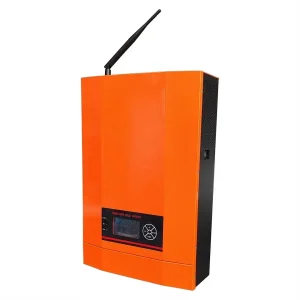
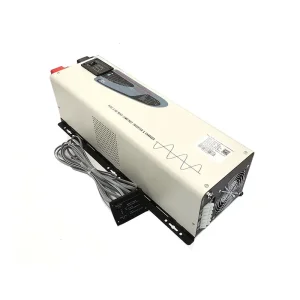
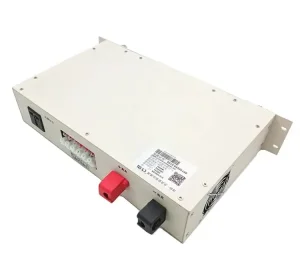
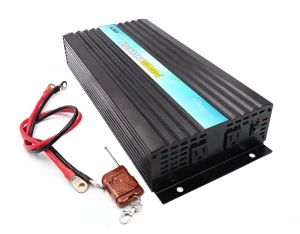
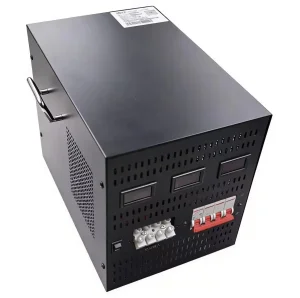
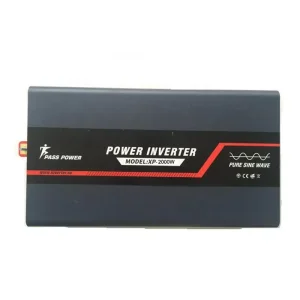
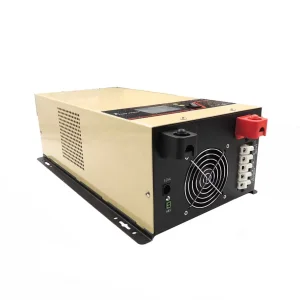
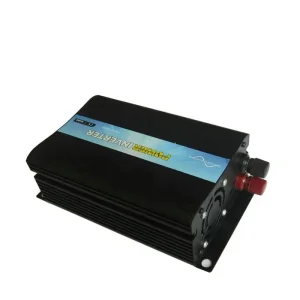
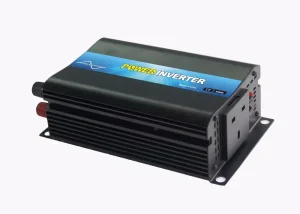
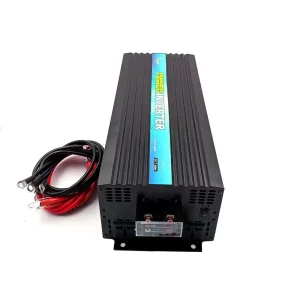
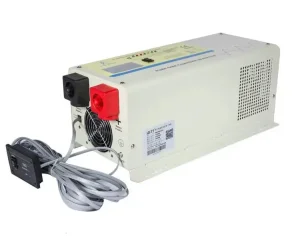
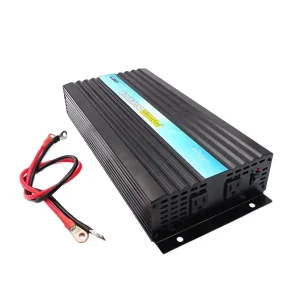
Bridging the gap between severe inductive motor surges, modern lithium battery chemistries, and ultra-fast AC transfer switching in off-grid infrastructure.
The global demand for reliable off-grid power solutions has evolved from simple standalone DC-to-AC conversion into highly complex, multi-source energy management. Modern commercial, industrial, and residential off-grid installations require robust wholesale inverters with integrated chargers capable of seamlessly harmonizing photovoltaic (PV) inputs, battery storage banks, auxiliary diesel generators, and public utility grids.
Core Engineering Insight: Unlike basic high-frequency inverter topologies designed purely for resistive loads, low-frequency off-grid inverter-chargers utilize heavy-duty toroidal copper transformers capable of handling peak surge power up to 300% of nominal rating for 20 milliseconds, preserving system integrity during motor start-ups.
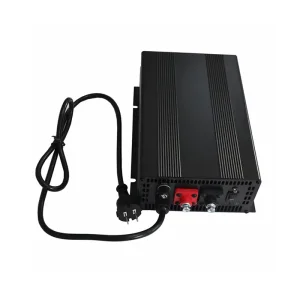
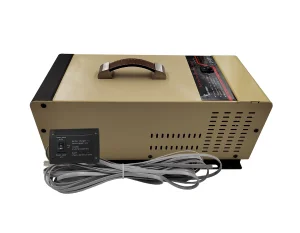
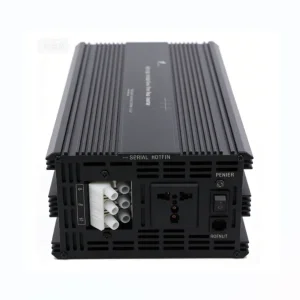
As tier-1 exporters and OEMs based in China’s advanced power-electronics manufacturing clusters, we engineer bi-directional inversion platforms that integrate Pure Sine Wave (PSW) DC-AC inversion, multi-stage adaptive battery charging, integrated MPPT (Maximum Power Point Tracking) solar controllers, and automatic transfer switches (ATS) with zero-to-sub-10ms transfer latency.
CE, RoHS, and ISO 9001 certified pure sine wave power units available for wholesale distribution and custom OEM production.
Tailored power topologies customized for harsh outdoor environments, commercial mobility, and critical infrastructure resilience.
Off-grid mobile platforms face constant vibration and fluctuating ambient temperatures. Our low-frequency inverter-chargers feature toroidal transformers that prevent core noise, while intelligent 3-stage AC chargers rapidly restore battery capacity whenever shore power or a vehicle alternator becomes available.
For rural micro-grids and off-grid homesteads, hybrid inverters combining MPPT charge controllers (up to 100A) manage direct solar self-consumption. Units prioritize free PV harvesting while managing grid/generator back-up inputs via configurable AC input voltage parameters.
Mission-critical installations require uncompromised voltage stability. With total harmonic distortion (THD) under 3%, our pure sine wave output safely powers delicate medical monitoring equipment, emergency radio repeaters, and heavy inductive air cooling pumps simultaneously.
Key technical parameters global B2B procurement managers must evaluate prior to issuing RFP/RFQ specifications for off-grid power hardware.
| Evaluation Factor | High-Frequency Inverter (HF) | Low-Frequency Toroidal Inverter (LF) | B2B Procurement Impact |
|---|---|---|---|
| Surge Capacity | 1.5x Nominal Rating (<100ms) | 3.0x Nominal Rating (Up to 20s) | LF required for HVAC, pumps, air compressors, and power tools. |
| Core Isolation & Safety | Electronic Switching Isolation | Galvanic Isolation (Toroidal Transformer) | LF provides superior surge absorption and lightning immunity. |
| Weight & Footprint | Ultra-compact, Light Weight | Heavier Due to Copper/Iron Core | HF for portable use; LF for fixed or heavy transport installations. |
| Battery Chemistry Compatibility | Standard Lead-Acid / AGM | Programmable LiFePO4 / NMC / Lead-Acid | Customizable charging voltage profile (BMS dry-contact activation). |
| No-Load Idle Power | Very Low (<15W) | Low-Loss Toroidal (<25W in Power Saver Mode) | Energy saving modes drastically prolong battery state-of-charge. |
Inside our ISO 9001:2015 certified manufacturing facilities: From automated SMT assembly to full-load high-temperature burn-in testing.
We maintain end-to-end quality control over core magnetic components. Operating high-precision toroidal winding machinery ensures tight copper winding, reduced magnetic leakage, zero core noise, and nominal operating thermal efficiency exceeding 95%.
Printed Circuit Board Assemblies (PCBAs) are produced on fully automated SMT lines utilizing imported Japanese MOSFETs and solid-state capacitors. All boards undergo double-sided conformal coating to protect electronics against humidity, salt fog, and dust contamination.
Zero-defect quality assurance is backed by 48-hour continuous burn-in testing under full rated power in temperature-controlled aging chambers (45°C+ ambient). Every production batch undergoes strict automated optical inspection (AOI) and hi-pot dielectric strength testing.
Engineered for immediate market insertion across North America, the European Union, Australia, Latin America, and Africa.
Exporting electrical equipment globally demands strict adherence to local electrical codes and grid interaction directives. Our OEM/ODM engineering teams configure products according to specific destination market specifications:
Full support for 60Hz frequency, NEMA socket configurations, neutral-ground bonding relays for RV codes (ANSI/RVIA), split-phase 120V/240V dual line output, and UL1741-compliant protection mechanisms.
CE Low Voltage Directive (LVD) and Electromagnetic Compatibility (EMC) compliance. Fully compliant with RoHS environmental limits, IEC 62109-1/2 solar safety standards, and Schuko/UK/Universal AC outlets.
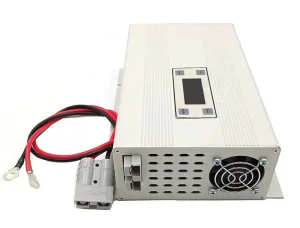
Integration with smart building networks and lithium battery BMS via RS485, CAN-bus, or Modbus protocols. Optional LCD touch screens, customized housing colors, and private-label silk screening available.
Anticipating energy storage evolution: Silicon Carbide (SiC) power switches, AI predictive charging algorithms, and cloud telematics.
Transitioning auxiliary switching components to Silicon Carbide (SiC) MOSFETs reduces switching losses by up to 40%, paving the way for hybrid topologies that combine high-frequency efficiency with toroidal surge resilience.
Next-generation internal firmware utilizes machine learning curves to dynamically adjust multi-stage battery charging profiles based on ambient heat history, internal resistance changes, and battery chemistry degradation indicators.
Integrated Wi-Fi / 4G / Bluetooth hardware platforms enable commercial operators to monitor fleet performance, track remote solar yield, execute OTA firmware updates, and receive real-time fault diagnostics worldwide.
Direct engineering answers to critical purchasing, installation, and technical customization inquiries.
A pure sine wave inverter reproduces utility-quality electrical power with total harmonic distortion (THD) under 3%. This is required for sensitive microprocessors, medical gear, variable-speed motors, and electronics. A modified sine wave inverter outputs a stepped square wave that generates excessive electrical noise, causes inductive motors (refrigerators, pumps) to overheat, and degrades sensitive power supplies.
Low-frequency inverters employ heavy toroidal transformers providing high peak surge capability (handling up to 300% rated load for up to 20 seconds). This makes them essential for starting motor-heavy loads like RV rooftop air conditioners, water pumps, and power tools. Additionally, the galvanic isolation of a toroidal core offers superior protection against electrical spikes and voltage instability.
When an active AC grid or generator source is detected, the inverter’s internal Automatic Transfer Switch (ATS) seamlessly bypasses the battery bank (in under 10 milliseconds) to power loads directly from the AC source while simultaneously converting incoming AC power into regulated DC power to recharge the connected battery bank according to a 3-stage (Bulk, Absorption, Float) curve.
Yes. Our inverters feature configurable DIP switches or digital LCD controls allowing custom selection of charging voltage thresholds specifically engineered for Lithium Iron Phosphate (LiFePO4), Lithium Nickel Manganese Cobalt (NMC), AGM, Gel, and flooded lead-acid batteries. OEM options also include dry-contact signals for external BMS interaction.
We provide comprehensive OEM customization including DC input voltage configurations (12V/24V/48V/96V/380V DC), customized AC output sockets (US, EU, UK, AU, Universal), private label silkscreening, customized LCD interface branding, bespoke chassis coloring, and tailored firmware for localized communication protocols (CAN/RS485).
Factory-direct exports engineered for reliable off-grid energy storage and mobile power conversions.