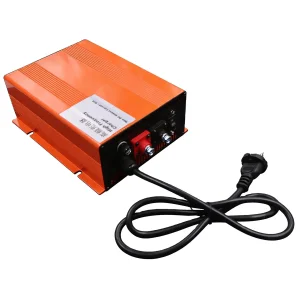
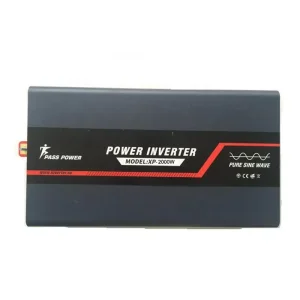
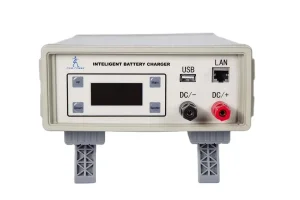
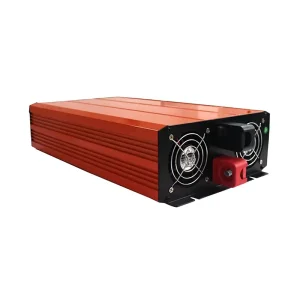
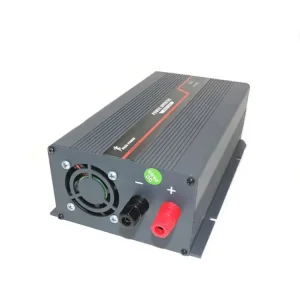
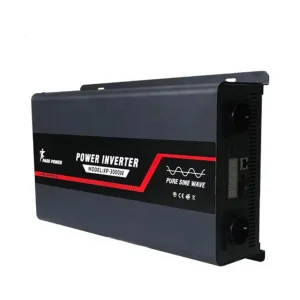
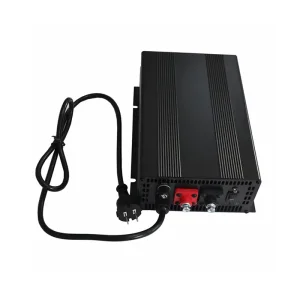
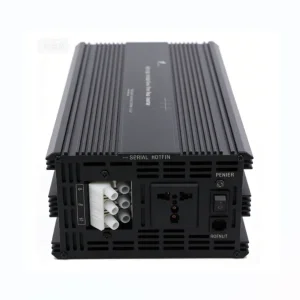
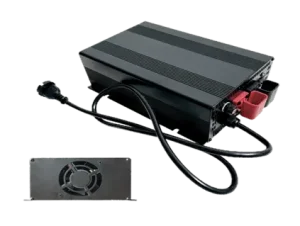
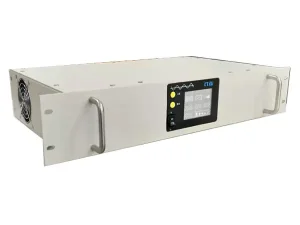
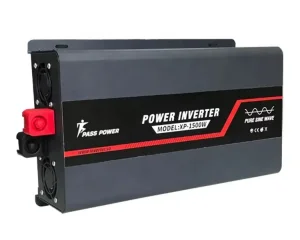
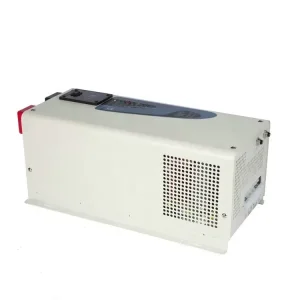
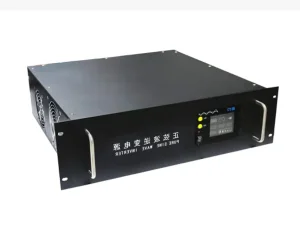
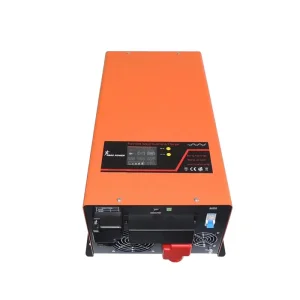
Featured wholesale products engineered with integrated reverse connect protection and high-efficiency power management systems.
In high-power DC distribution environments—such as energy storage systems (ESS), automotive battery charging, solar photovoltaic microgrids, and marine power hubs—reverse polarity connection remains one of the primary causes of catastrophic hardware failures, electrical fires, and expensive warranty claims. As the global transition toward renewable energy and electrification accelerates, power electronics manufacturers, OEM vehicle integrators, and industrial electrical distributors must deploy reliable, zero-latency Reverse Connect Protection (RCP) architectures.
Connecting a high-capacity DC source, such as a LiFePO4 battery array or high-voltage solar string, with inverted polarity causes an immediate short-circuit loop. Without instantaneous isolation, the reverse voltage creates massive inrush currents capable of destroying input filter capacitors, vaporizing PCB copper traces, welding relay contacts, and rupturing power MOSFET switches within microseconds. For B2B buyers and system integrators, selecting qualified wholesale suppliers and exporters offering active RCP mechanisms is essential to safeguarding mission-critical electrical infrastructures.
Traditional protection strategies relied heavily on passive components, such as series blocking diodes or sacrificial fuses combined with parallel shunt diodes. However, modern high-current applications demand far higher energy efficiency and automatic self-recovery capabilities. High-performance pure sine wave inverters, smart battery chargers, and hybrid solar controllers now implement active reverse connect protection powered by N-channel and P-channel power MOSFETs controlled by micro-power ideal diode drivers. This technical whitepaper explores the macro-industrial shift toward intelligent reverse polarity mitigation, detailing engineering topologies, global regulatory compliance, and OEM integration parameters.
To evaluate power electronics suppliers effectively, system engineers must understand the underlying technical trade-offs of different Reverse Connect Protection (RCP) circuits. Below is a comprehensive analysis of the four dominant topologies utilized across commercial inverters, battery chargers, and power conversion modules.
The simplest topology places a Schottky or silicon diode in series with the positive DC line. While low cost, it causes continuous forward voltage drops (0.4V to 0.7V), resulting in severe power dissipation ($P = I \times V_f$). At 100A continuous current, a Schottky diode dissipates 40W–50W as waste heat, requiring massive heat sinks and degrading system efficiency.
A reverse-biased diode is placed in parallel across the DC input terminals, backed by an inline fuse. When polarity is reversed, the diode conducts, deliberately blowing the fuse to isolate the load. While effective, it requires manual fuse replacement after every incident, increasing maintenance costs and operator downtime in commercial applications.
Utilizing low $R_{DS(on)}$ power MOSFETs configured as an "Ideal Diode", this topology monitors source-to-drain voltage. During correct polarity, the MOSFET is fully biased ON, yielding sub-milliohm conduction resistance. Power loss drops by up to 98% compared to traditional diodes, eliminating thermal bottlenecks in high-amp chargers and inverters.
The matrix below compares key operating metrics for reverse connect protection mechanisms operating at 12V / 24V / 48V DC nominal inputs under high-load conditions.
| Topology / Parameter | Forward Voltage Drop ($V_f$) | Power Loss @ 100A | Response Time | Self-Recovery | Relative Cost |
|---|---|---|---|---|---|
| Series Schottky Diode | 0.45 V – 0.60 V | 45 W – 60 W | Instantaneous | Yes | Low |
| Shunt Diode + Sacrificial Fuse | 0.01 V (Fuse trace) | 1 W – 3 W | 5 ms – 20 ms (Fuse melt) | No (Requires Fuse) | Very Low |
| Electromechanical Relay Switch | < 0.005 V | 2 W – 5 W (Coil power) | 10 ms – 30 ms | Yes (Automated) | Medium |
| N-Channel MOSFET Ideal Diode | < 0.015 V ($I \times R_{DS}$) | 1.5 W – 4 W | < 1 µs (Microsecond) | Yes (Instantaneous) | High (Premium) |
Technical Superiority Insight: Modern Maili high-frequency and low-frequency inverter-chargers utilize multi-MOSFET parallel active protection matrices with integrated gate charge pumps. This guarantees sub-microsecond disconnection during reverse contact while maintaining ultra-high operating efficiency (>95%) during normal operation.
Reverse Connect Protection is mandatory across multiple mission-critical industries where field technicians, emergency responders, or off-grid users handle DC power cabling under adverse environmental conditions. Reliable OEM suppliers must design protection hardware tailored to localized regional grids and specialized vehicle systems.
Dual-battery isolators and inverter-chargers installed in RVs and yachts face frequent battery bank upgrades and maintenance. Active reverse connection protection prevents costly damage when end users accidentally swap positive and negative heavy-gauge battery cables during seasonal battery replacements.
High-voltage DC solar inputs (up to 380V DC) present severe arc-flash risks. Photovoltaic charge controllers and hybrid inverters with built-in electronic reverse voltage suppression ensure that reverse wiring of solar panel strings during field installation will not trip breakers or destroy main power boards.
Ambulances, fire trucks, and mobile service rigs rely on auxiliary 12V/24V high-current chargers. Rapid plug-and-play battery swaps in fast-paced operational environments require automated, non-sacrificial reverse protection to keep rescue vehicles continuously operational without fuse changes.
As a global exporter, Maili Electric provides comprehensive customization across input/output standards, voltage ranges, and environmental enclosures. Sourcing from experienced original equipment manufacturers ensures that your imported power equipment aligns with localized grid codes, including 110V/120V 60Hz split-phase for North America and 220V/230V 50Hz single-phase systems for Europe, Australia, and Asia.
When procuring power inverters and automatic chargers in wholesale quantities, verifying international safety certifications and testing standards is paramount for market access and liability protection.
Our 2,770 m² factory facility in Suzhou operates under strict ISO 9001 quality management systems. Every inverter and smart charger undergoes 100% full-load aging tests, high-voltage insulation breakdown tests, and simulated reverse polarity stress testing before shipment.
All exporting units comply with European Electromagnetic Compatibility (EMC) Directive 2014/30/EU and Low Voltage Directive (LVD) 2014/35/EU. Hazardous substance restrictions are rigorously enforced, guaranteeing environmentally safe distribution in strictly regulated markets.
Beyond Reverse Connect Protection, products incorporate Over-Voltage Protection (OVP), Under-Voltage Lockout (UVLO), Short-Circuit Protection (SCP), Over-Temperature Shutdown (OTP), and Intelligent Cooling Fan speed regulation.
The future of reverse polarity protection and DC power management is tied directly to developments in Wide Bandgap (WBG) semiconductors and smart IoT-enabled telemetry. OEM manufacturers are actively upgrading technical architectures to deliver higher power density and deeper system diagnostic capabilities.
Gallium Nitride (GaN) and Silicon Carbide (SiC) FETs offer dramatically lower gate capacitance and near-zero reverse recovery charge ($Q_{rr}$). Incorporating GaN/SiC switches into active reverse polarity blocking circuits reduces active PCB footprint by up to 40% while raising operating junction temperature limits to over 175°C.
Modern hybrid inverters increasingly migrate protection logic into digital Signal Processors (DSPs) and ARM Cortex-M microcontrollers. Instead of relying purely on discrete analog comparators, software-defined algorithms continuously sample terminal voltages, detecting reverse connection transients in real-time and logging error codes over CAN-bus, RS485, or Bluetooth interfaces for remote diagnostic monitoring.
With Lithium Iron Phosphate (LiFePO4) becoming the dominant chemistry in energy storage, reverse connect protection circuits must account for BMS cut-off transients. Active MOSFET protection gates are calibrated to remain stable even during sudden BMS disconnect spikes, preventing voltage ringing from damaging downstream sensitive electronics.
Expert engineering insights regarding Reverse Connect Protection sourcing, technical specifications, and custom OEM inquiries.
Connecting a high-power inverter in reverse polarity without active protection causes instantaneous current spikes through the anti-parallel body diodes of the primary H-bridge MOSFETs or input bulk electrolytic capacitors. This results in exploded filter capacitors, vaporized copper traces on the printed circuit board, welded relay contacts, and irreversible damage to internal driver ICs, posing significant fire and safety hazards.
N-Channel MOSFET active protection (Ideal Diode topology) offers ultra-low ON-resistance ($R_{DS(on)}$ measured in milliohms), reducing conduction losses by over 95% compared to series blocking diodes. Unlike electromechanical relays which take 10ms–30ms to switch and are prone to mechanical wear or arc welding, MOSFET circuits disconnect reverse voltage in under 1 microsecond without wear, noise, or significant thermal buildup.
Yes. Maili multi-stage intelligent battery chargers feature dedicated algorithm modes for LiFePO4, AGM, and GEL batteries. The integrated electronic protection circuit monitors terminal voltage continuously. If a user connects charging clamps backward, the charger detects the negative potential immediately, locks out current output, illuminates an LCD fault indicator, and prevents any damage to the battery's internal Battery Management System (BMS).
As a direct manufacturer and exporter, Maili Electric provides extensive OEM/ODM customization options including custom DC input voltages (12V, 24V, 48V, up to 380V DC), custom charging current profiles, input/output socket types (GFCI, Universal, EU, UK, US), private-label chassis colorways, customized LCD display branded logos, and tailored communication protocols (CAN-bus, RS485, Modbus).
All factory shipments are manufactured under an ISO 9001:2015 certified quality control framework. Individual product lines carry CE, RoHS, IP30 ratings, and full SGS test reports. Prior to export packaging, units undergo rigorous full-load burn-in testing, insulation resistance testing, and full functional protection verification.
Explore our complete export catalog of pure sine wave inverters, high-voltage converters, and rack-mounted charging systems.